
Winning change to our industrial relations laws was just the beginning. Protecting what we’ve won - and building on progress - will be our mission for the next three years.
The Federal Labor Government won a victory for the ages by promising progress for working people. This is a good moment to make lasting change.
The Closing the Loopholes reforms have started to be felt in the real world. Big, transformative pay rises for aged care workers, early childhood educators, and cabin crew have caught the attention of workers across Australia. The right to disconnect has driven a 33% decrease in unpaid overtime (and, more to the point, an increase in paid overtime). And more workers are getting permanent, secure jobs with all the benefits they need.
 But six months out from the 2025 election the Labor Government was not popular. A survey of over 900 working people in November 2024 found that 50% said Australia was heading in the wrong direction. 77% suspected the cost of living was getting worse, and barely 28% agreed that Federal Labor was “working hard to fix it”. This was a union audience - our choir, and they were not singing.
The Closing the Loopholes legislation had passed, but the gears of industrial instruments grind slowly. Many of the new rights for workers would not come into effect until January 2025.
Polls were trending ever more negatively for Prime Minister Anthony Albanese, and voter sentiment in the community seemed at best disinterested.
Disinterest in politics is something the working class can simply not afford. Thousands of unionists around Australia know that the Liberal Party exists only to oppose the ambitions of working people. The HR Nicholls society was flagging wholesale changes to Australia’s industrial landscape, and bosses were already wining and dining Peter Dutton in anticipation of a Liberal victory.
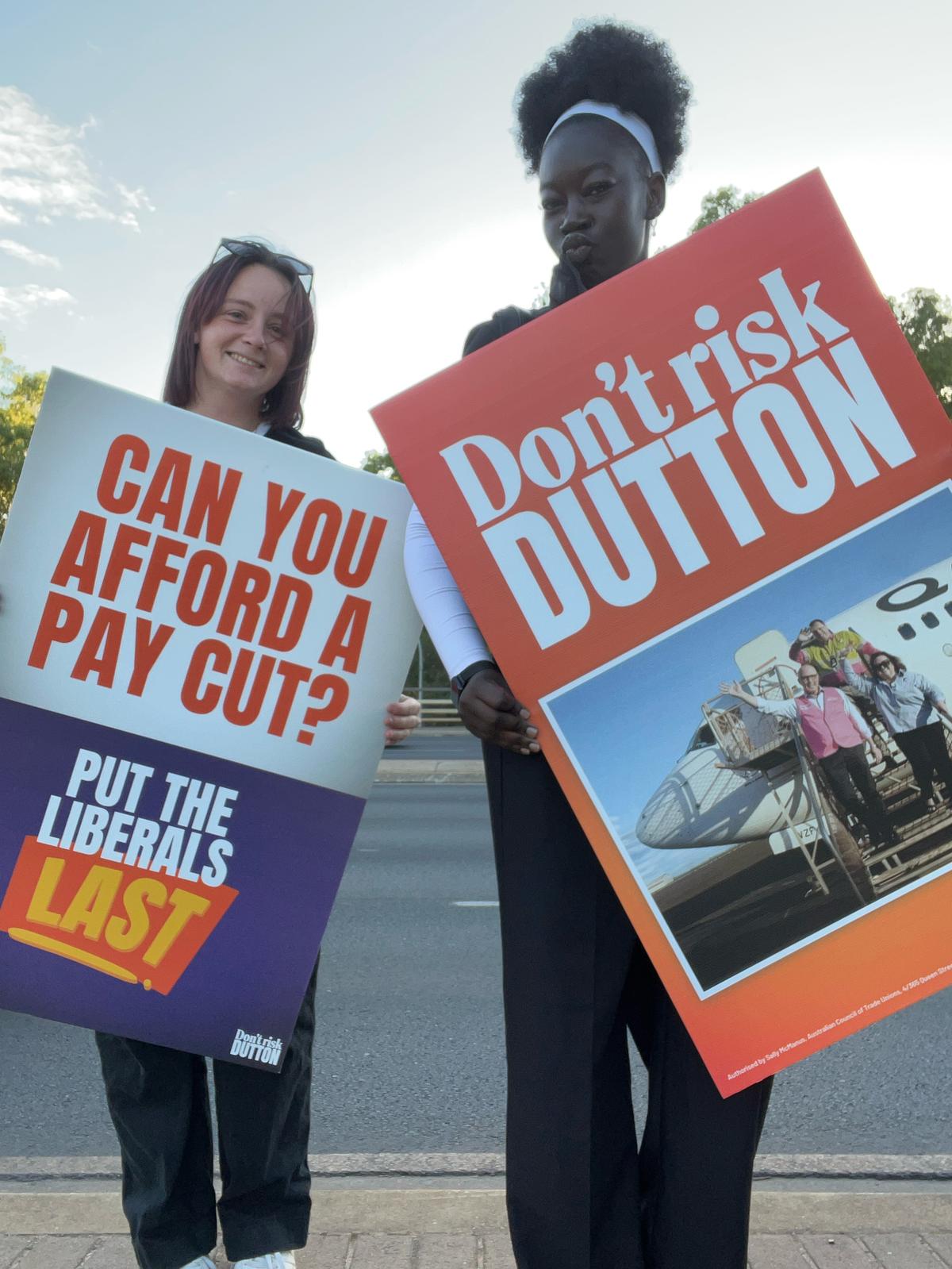
In this environment, where the government was behind in the polls, union volunteers began their community actions; street stalls, train station handouts, having persuasive conversations.
Motivating yourself to turn out early in the mornings and speak to an apathetic audience is tough. But this is also the work that defines our movement - “if you don’t fight, you lose”. Union members turned out before there was hope, and together they helped to create it.
Campaign volunteers mobilised in the seats we knew the Liberals were targeting. Areas like Hawke in Melbourne’s West had recorded double digit swings against Labor at the previous Federal Election - in contrast to the national swing to the left. These are working-class seats where cost-of-living issues were biting hard. “The conversations were tough, but they were on issues where we had a story to tell” says campaigns lead Claire Boland. “We spoke about our shared values in local contexts””
Having negotiated some incredible industrial reforms through parliament, ACTU campaign organisers charged union leaders and organisers with the mammoth task of explaining the reforms to union delegates, members, and the voting public. In industrial campaigns unions were already winning pay rises and better working conditions for members. Early industrial wins - early childhood educators winning a $15,000 pay rise, Qantas employees winning using same job same pay - cut through with mainstream media coverage.
Focus group research showed that unions were a trusted voice in the communities we would need to win, and that distrust in big business and employers was at record highs. In Victoria the mood against the big supermarkets was further entrenched by Woolworths’ disastrous lockout of distribution workers, which ended with a mighty victory for the union members resisting surveillance and algorithmic management.
Another survey by Trades Hall in February saw Labor’s fortunes beginning to turn around. This time Labor was viewed as more in-tune with the needs of working people, and a sense of optimism began to creep into responses. Respondents were almost twice as likely to agree Labor was working hard to address cost of living concerns.
As always, the campaign leveraged union members’ trustworthiness on the issues affecting our communities; nurses talked about aged care and women’s health, teachers spoke of the impact of free TAFE, other unionists spoke of pay rises and new rights.
In March campaigners from the ANMF, IEU, RTBU, AEU and MUA spent 2 hours on the phones and smashed through 5000 phone calls to members in marginal seats, and women activists hit another 1000 a week later. “The phone calls were great” said one volunteer. “Instead of launching right into election stuff, which people get sick of, we were able to talk about the industrial rights we had won and which we were campaigning to keep. People were really positive because they wanted to hear from unions about what the election meant for their job, their life.”
By the time Peter Dutton had announced and then walked back his return-to-office policy, public service cuts, and a handful of other policy thought bubbles, Labor had hit it’s campaign stride. Conversations were overwhelmingly positive, though seasoned campaigners kept a lid on their hopes.
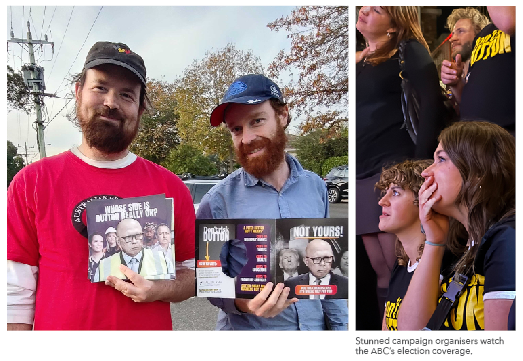
The lid came off at about 7pm at Trades Hall as the first 5% of votes came in.
Aston, Bruce, Chisholm, Dunkley, McEwan and Hawke came in strong. Neighbouring Liberal seats began to topple, including, with a roar from the assembled volunteers, Dutton’s seat of Dixon. A bloodbath. Trades Hall Secretary Luke Hilakari played to the crowd; “Because of the work of all of you, Australia has said yes to people power not nuclear power. We said yes to better jobs. We said yes to renewables. We said yes to women’s health. Yes to TAFE. We said yes to Medicare. We said yes to our public servants.”
The work has just begun. Multi-Employer bargaining campaigns can now kick off with certainty. Union membership growth, already tracking upwards for the first time in decades, will grow with concerted effort. Workers in Australia need to be actively asking for more, so we can live better lives; that’s what the light on the hill is all about.
On the eve of the election Assistant Secretary Wil Stracke described campaigns as like building a vessel to cross a river. “Sometimes you build this magnificent ship, and the wind blows the wrong way and you’re sunk. Other times you’ve got a raft stuck together with shoelaces and duct tape and by sheer determination and luck you make it across unscathed. It’s not all up to us”.
A thumping Labor victory gives union members room to work for progress. Let’s get organising.