After 13 months the Victorian Government is yet to make a pay offer that matches inflation, while workloads continue to rise. As Victoria experiences a burnout epidemic, those on the backfoot are fighting for reduced workplace stress and fair pay, as well as urgent action to address unsustainable workloads and chronic staff shortages.
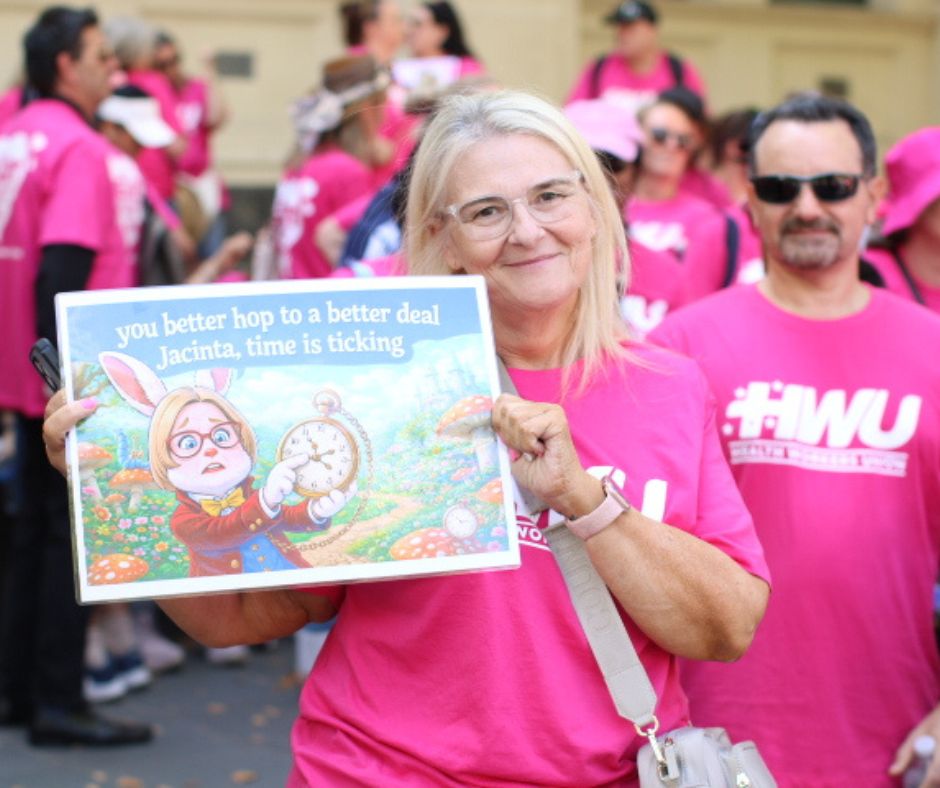
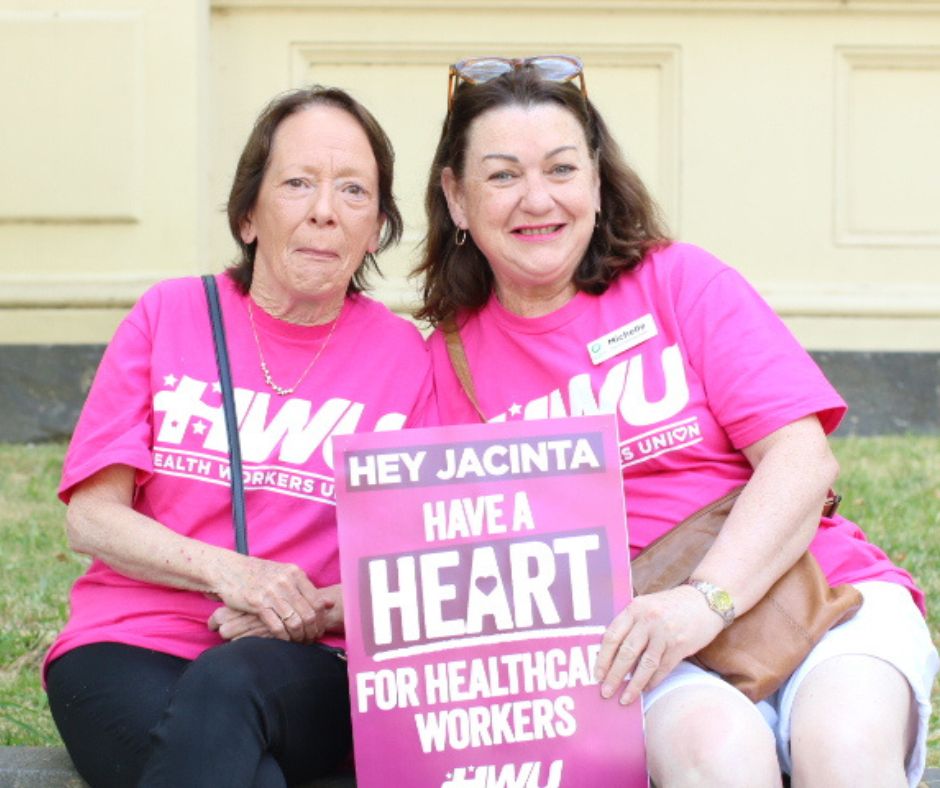
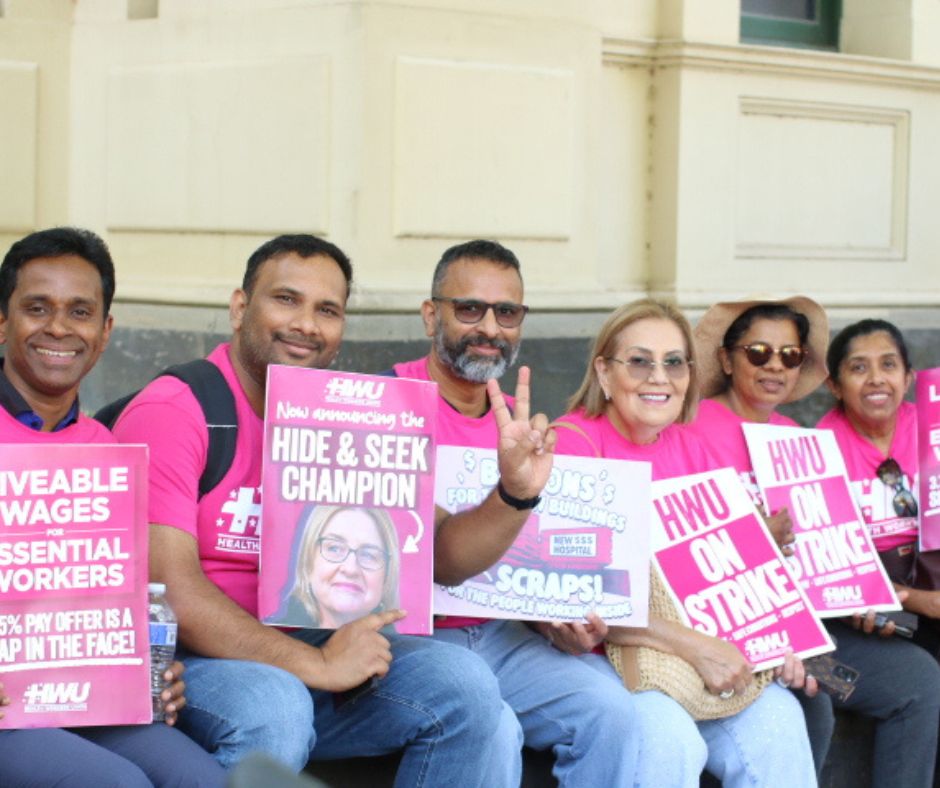
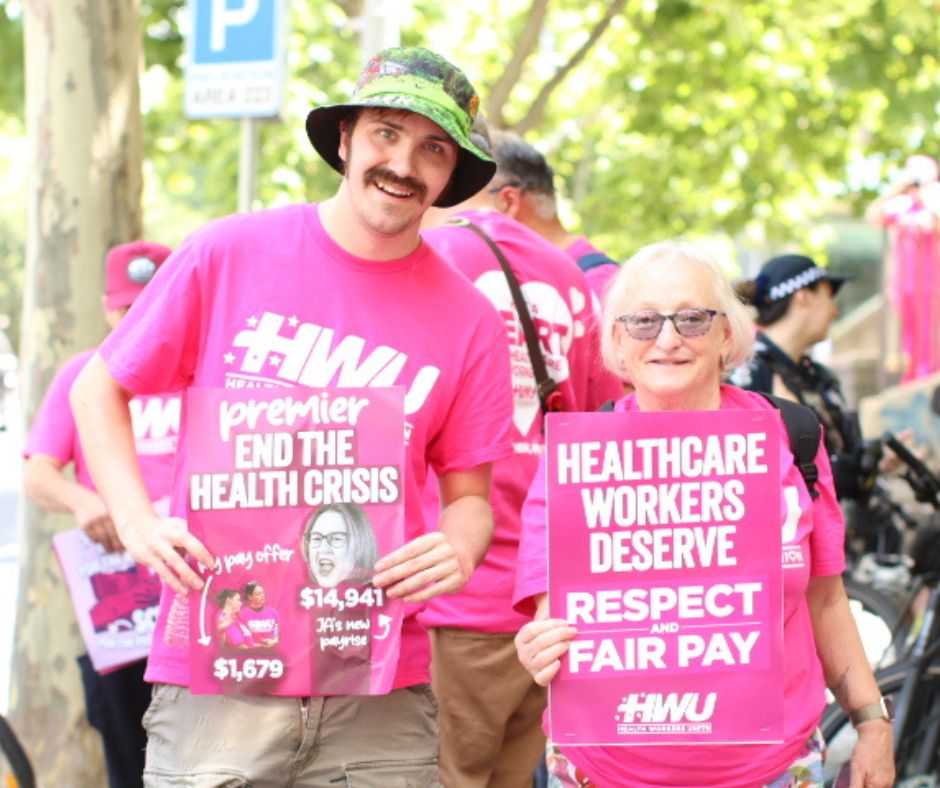
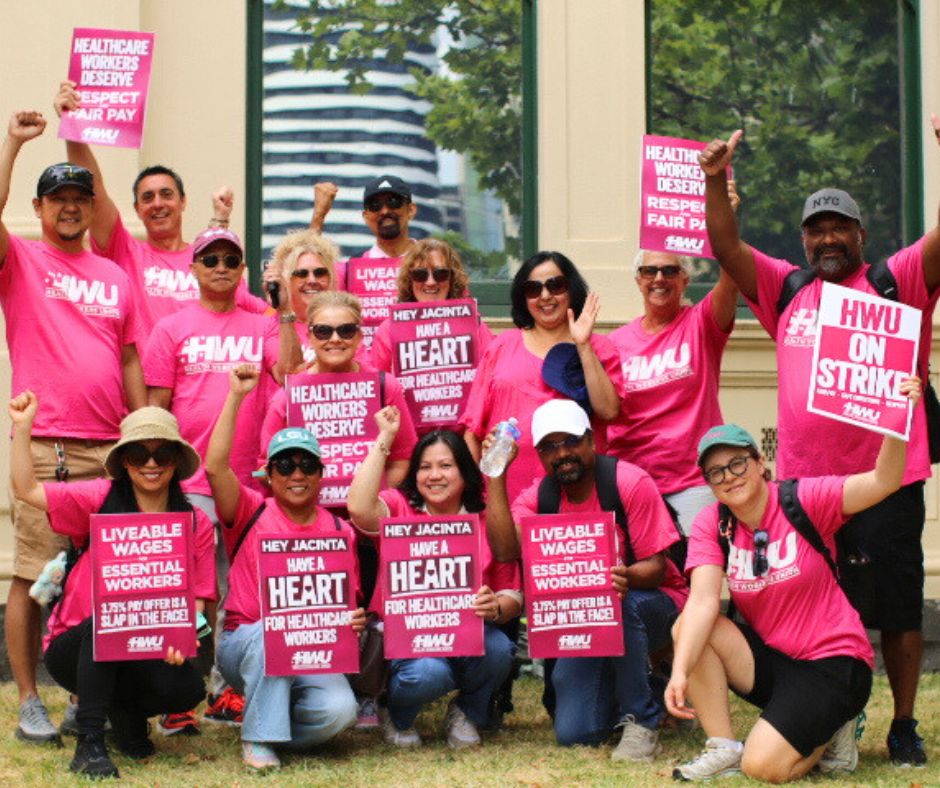
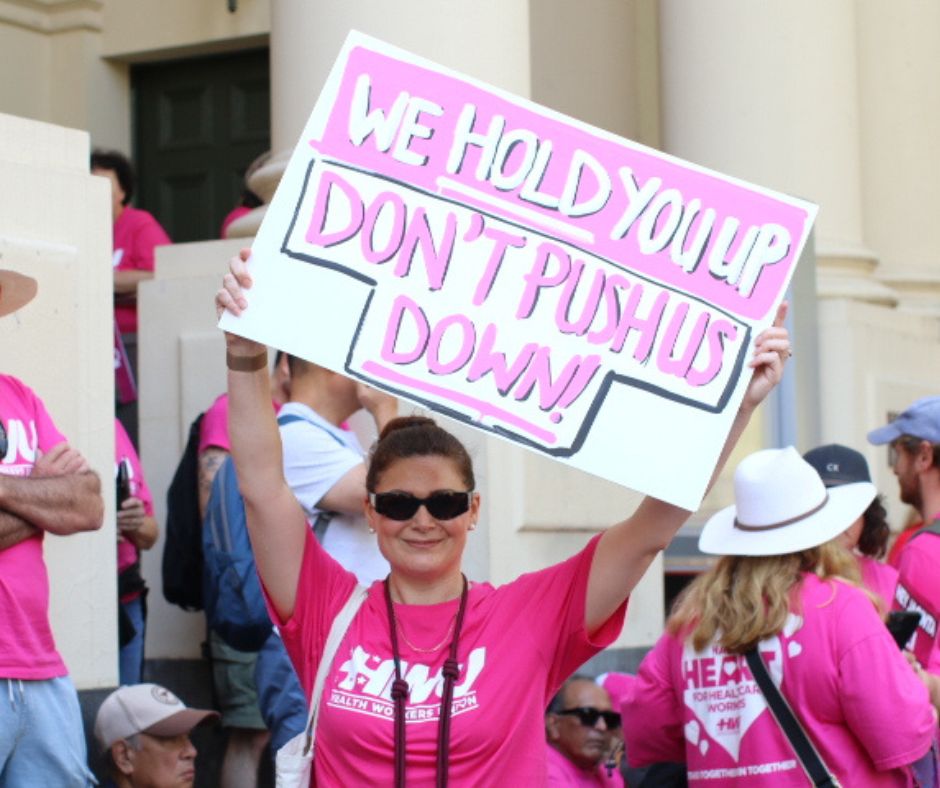
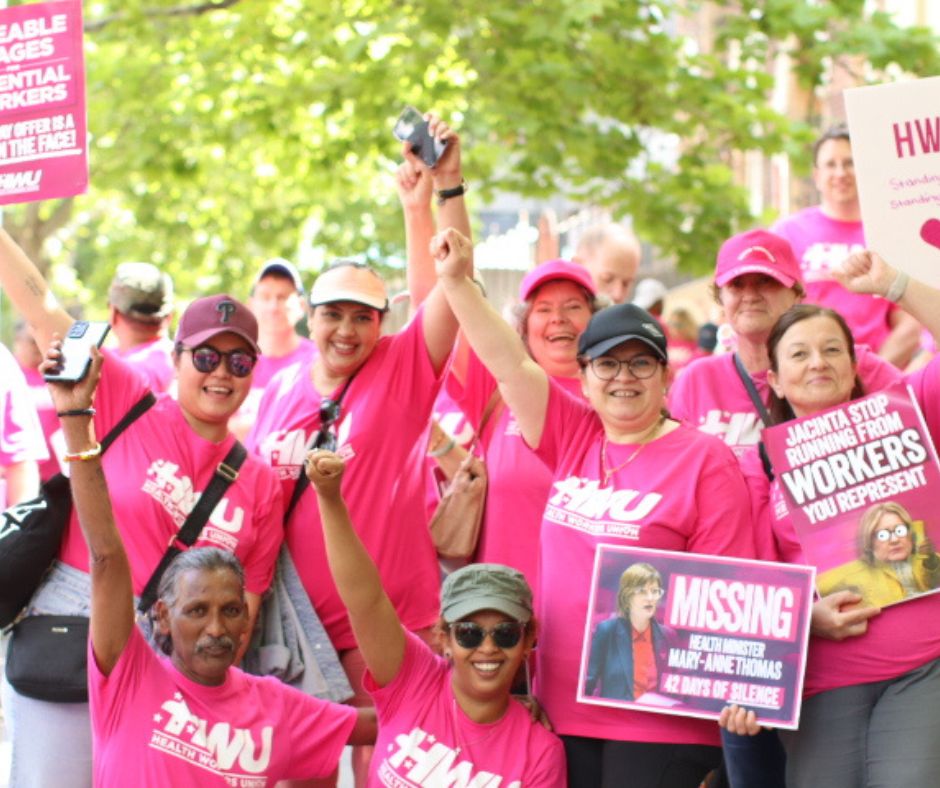
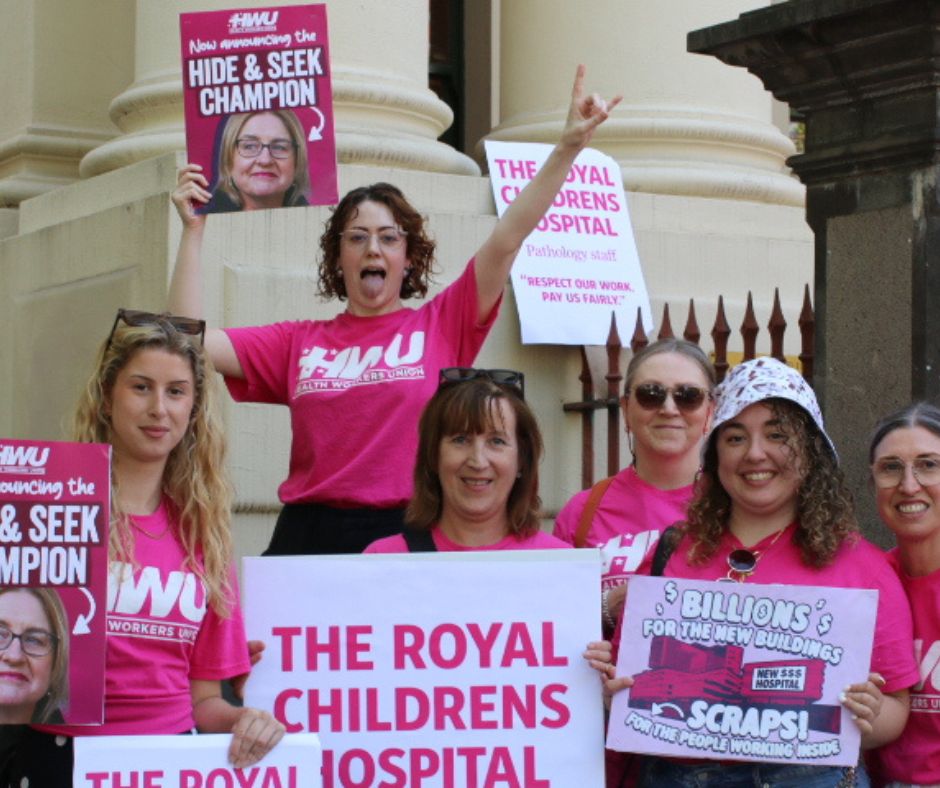
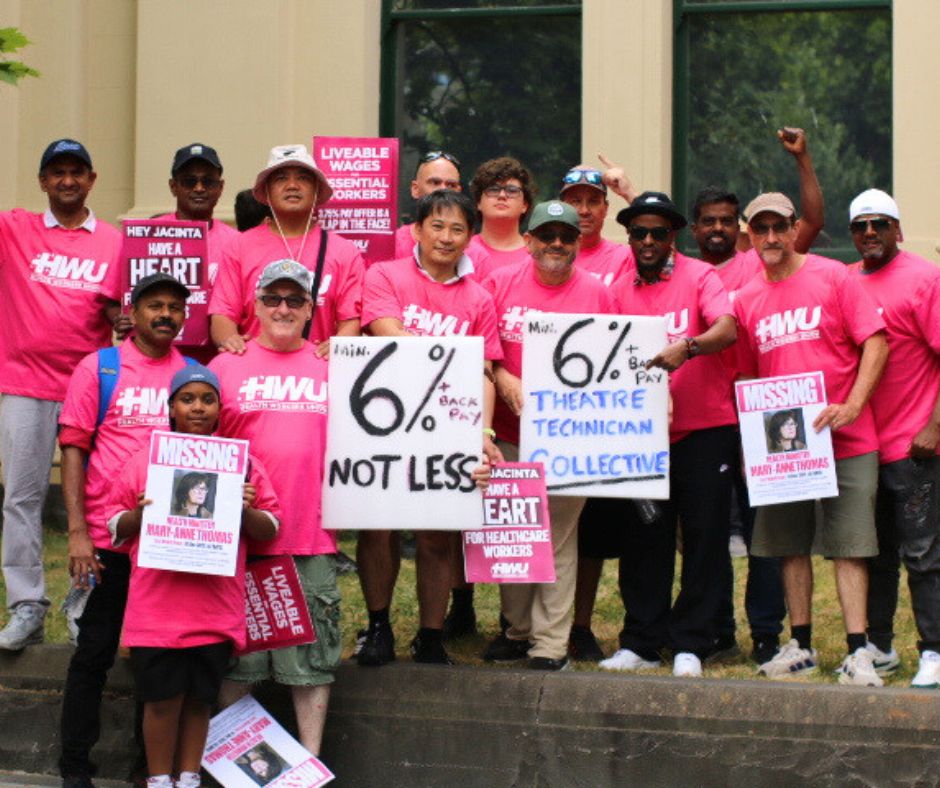
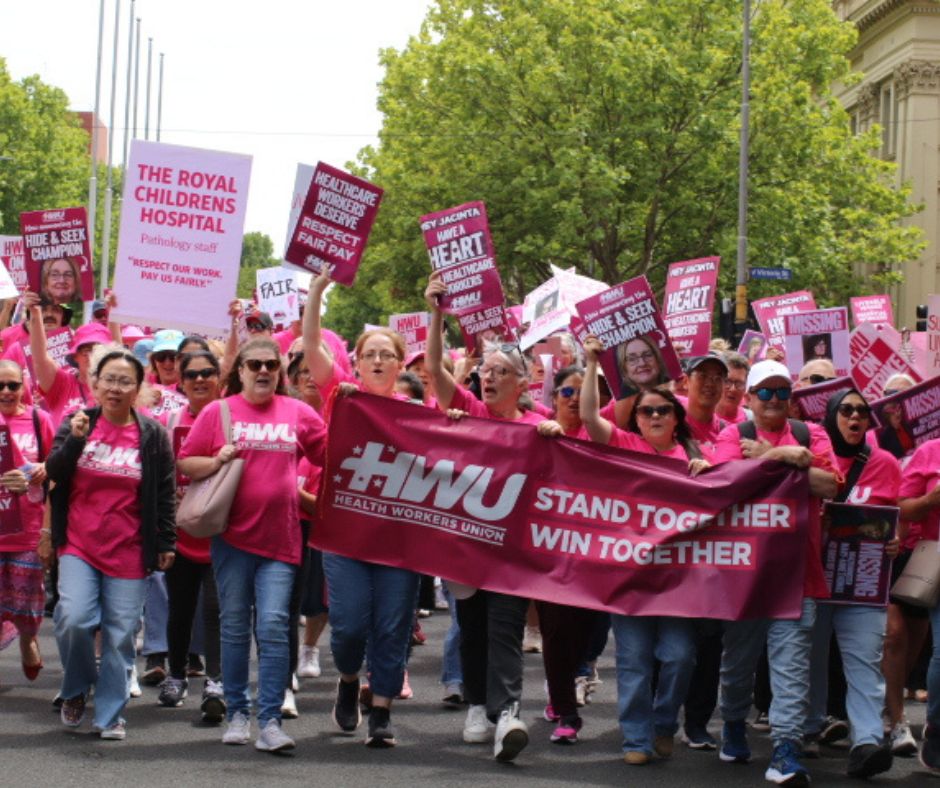
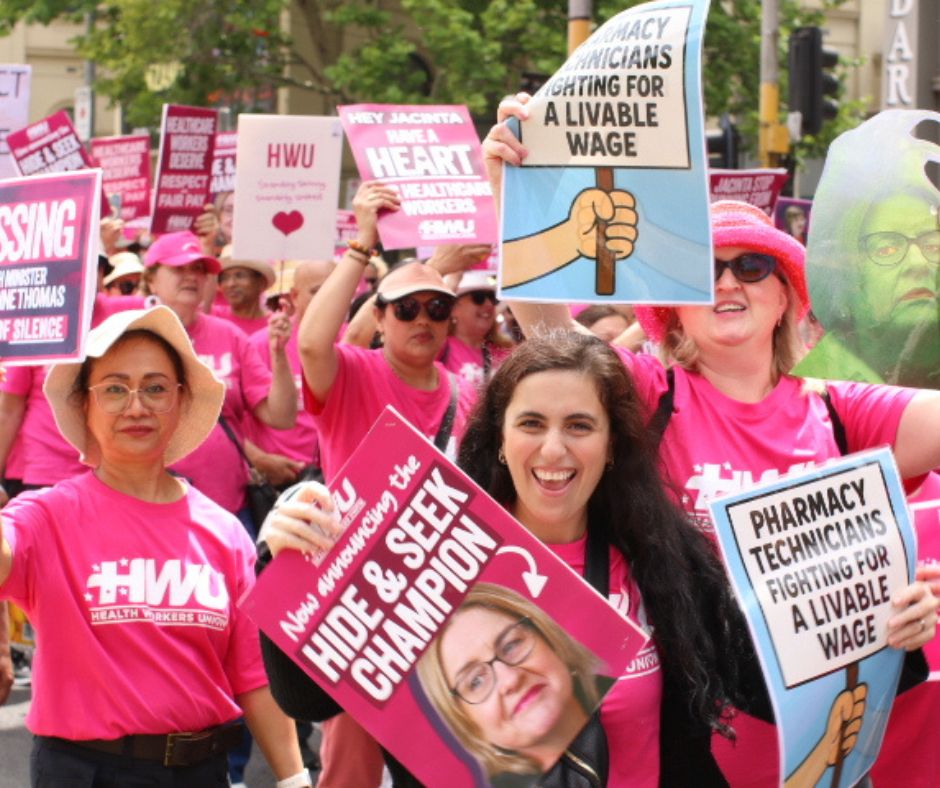
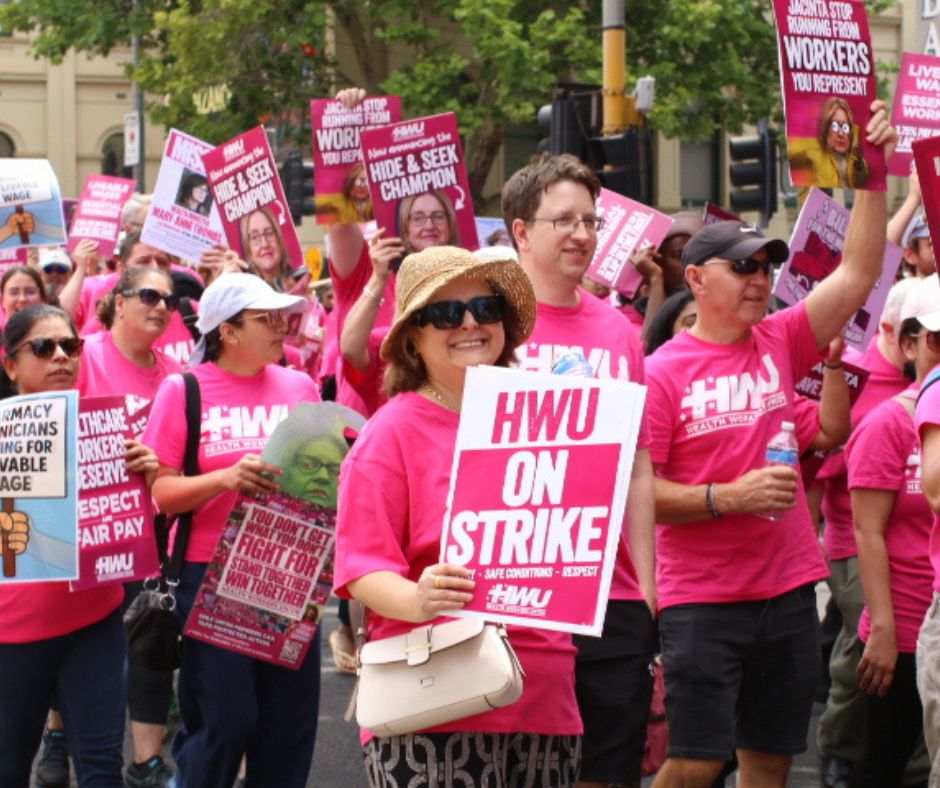
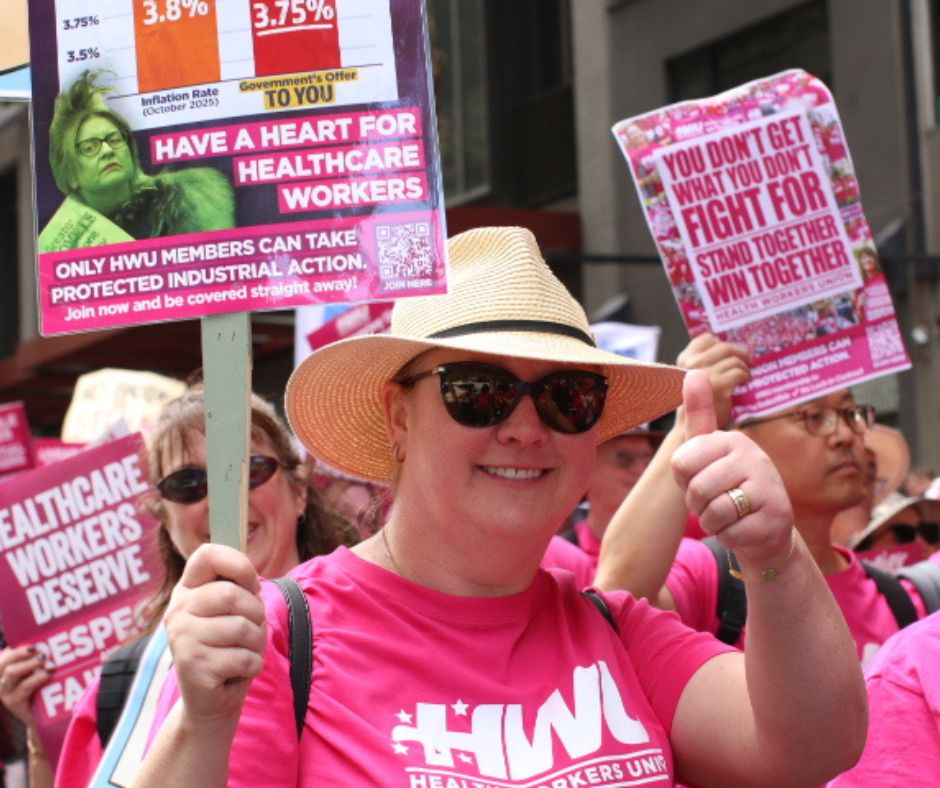
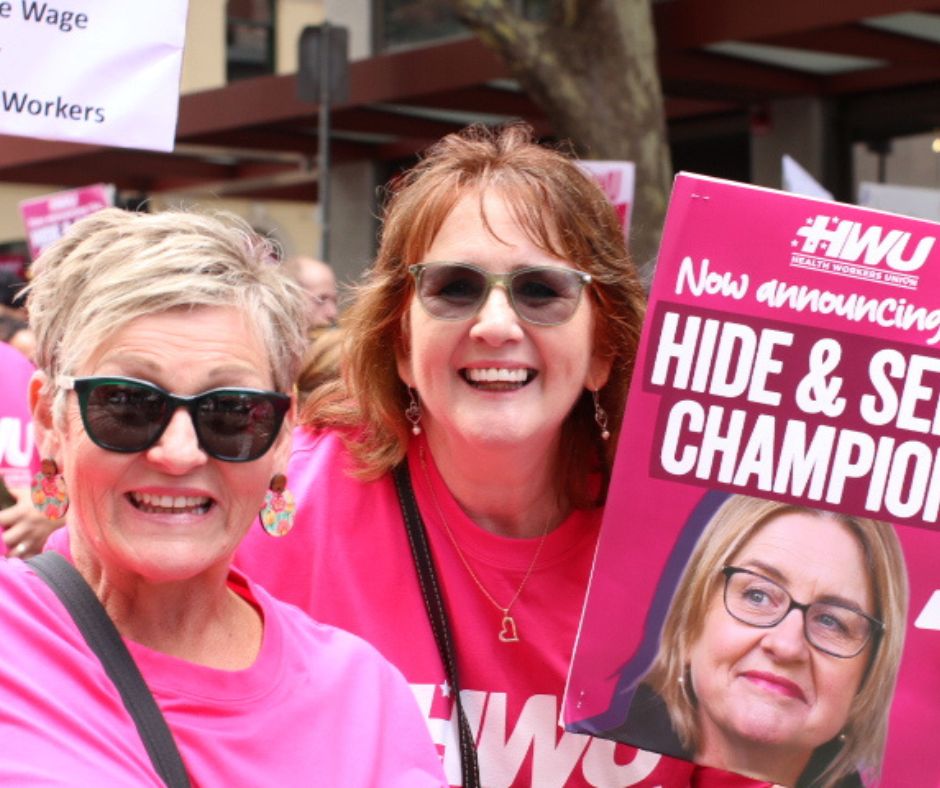
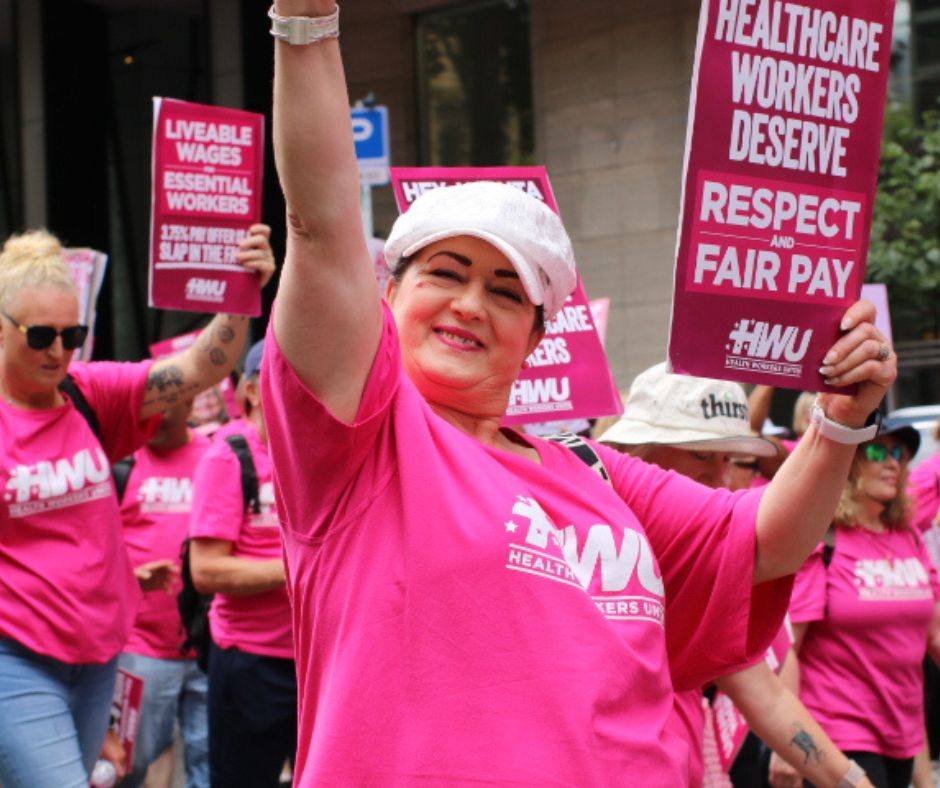
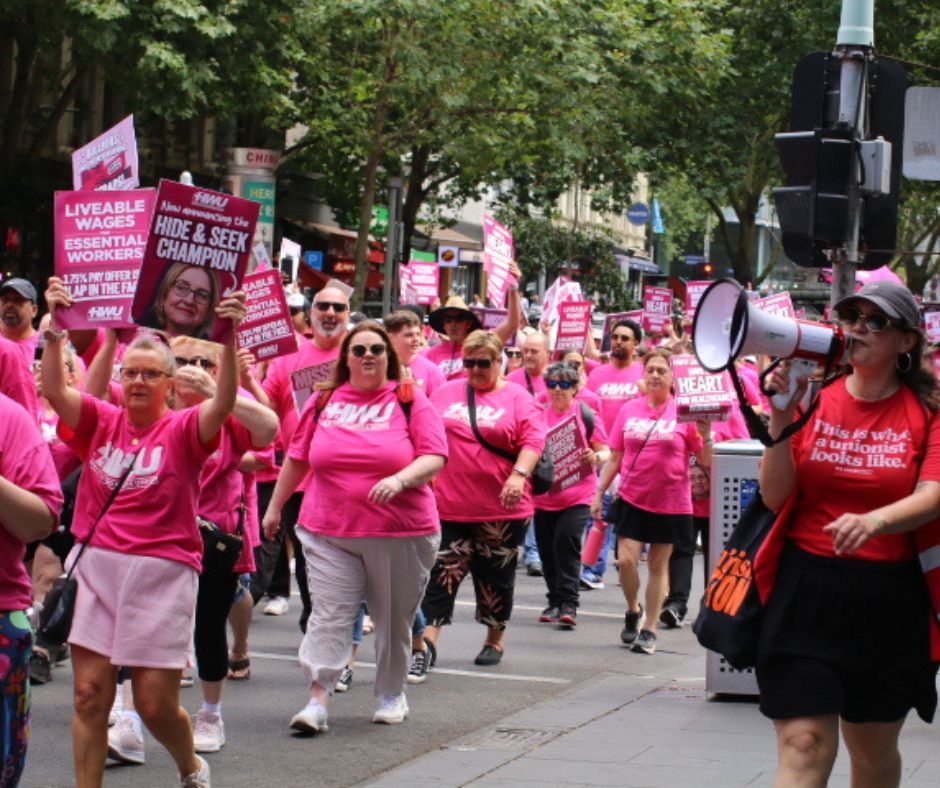
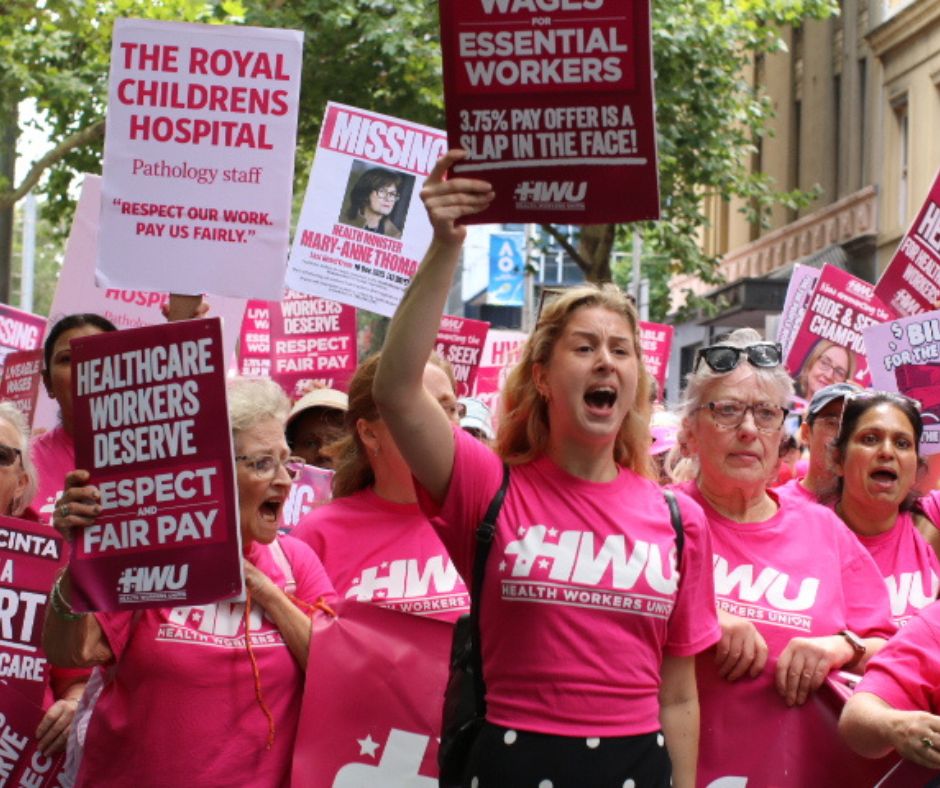
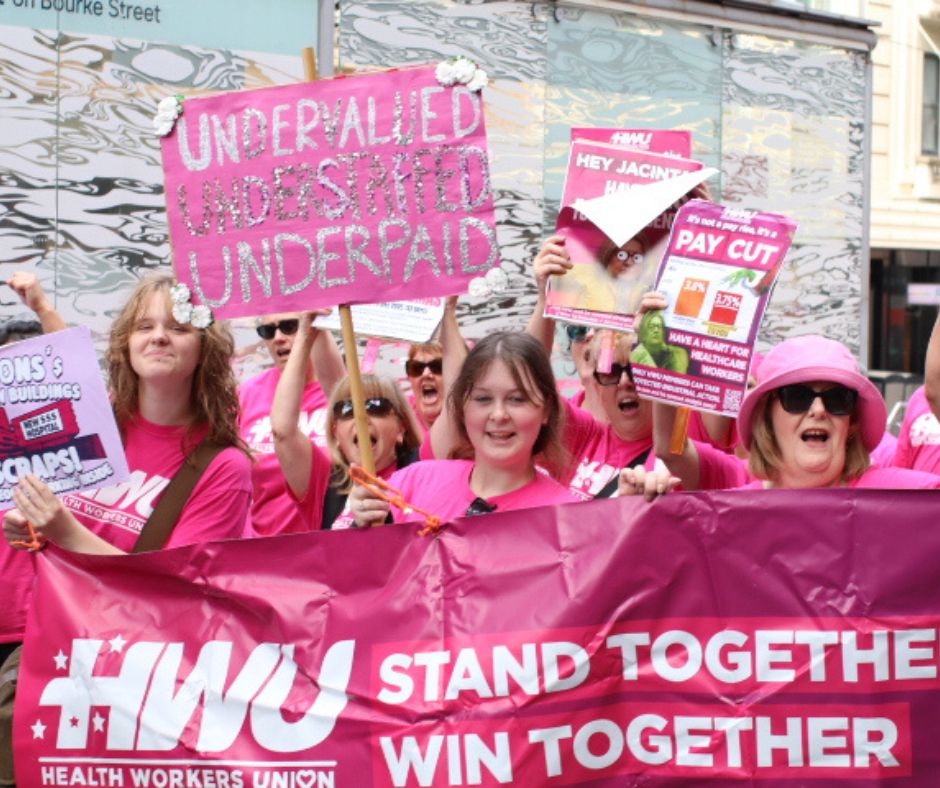
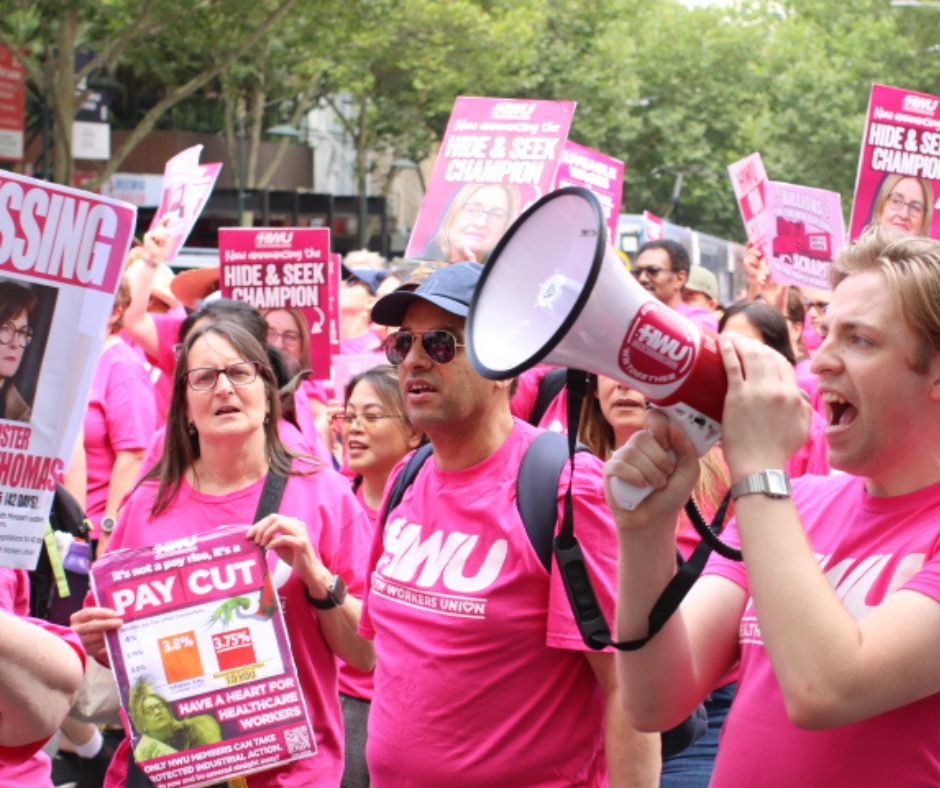
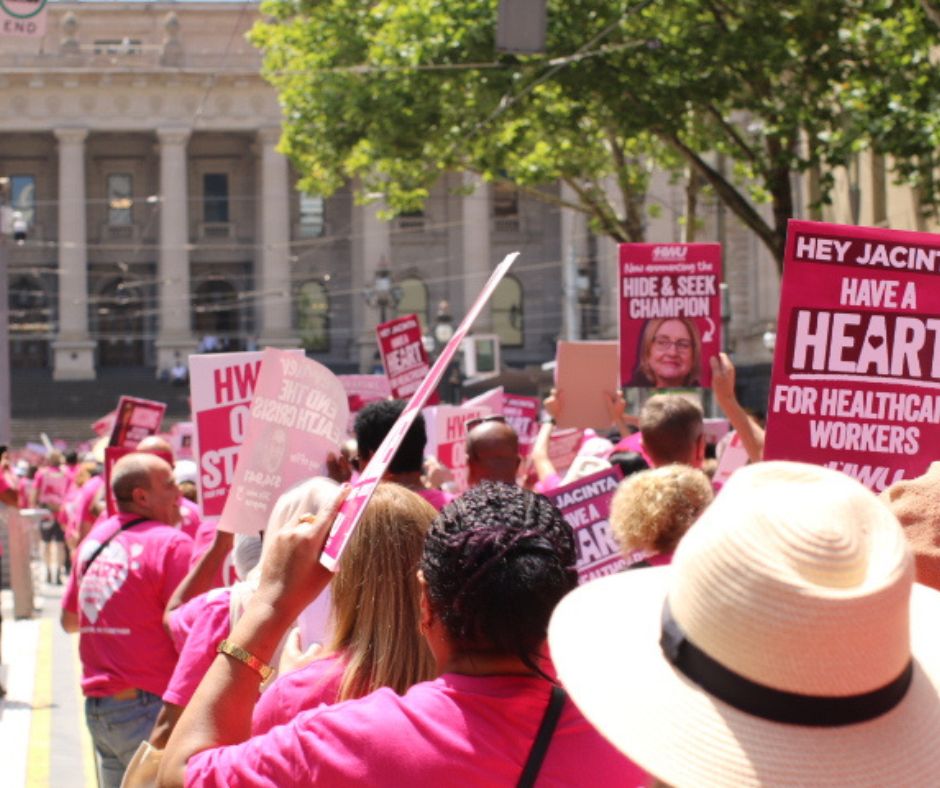
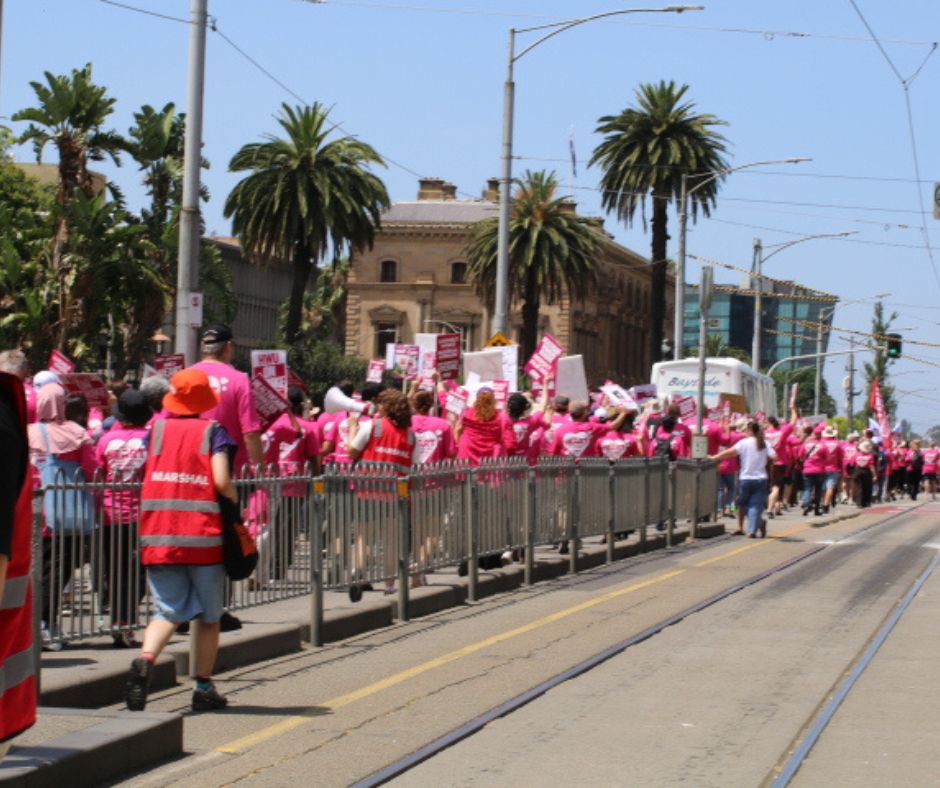
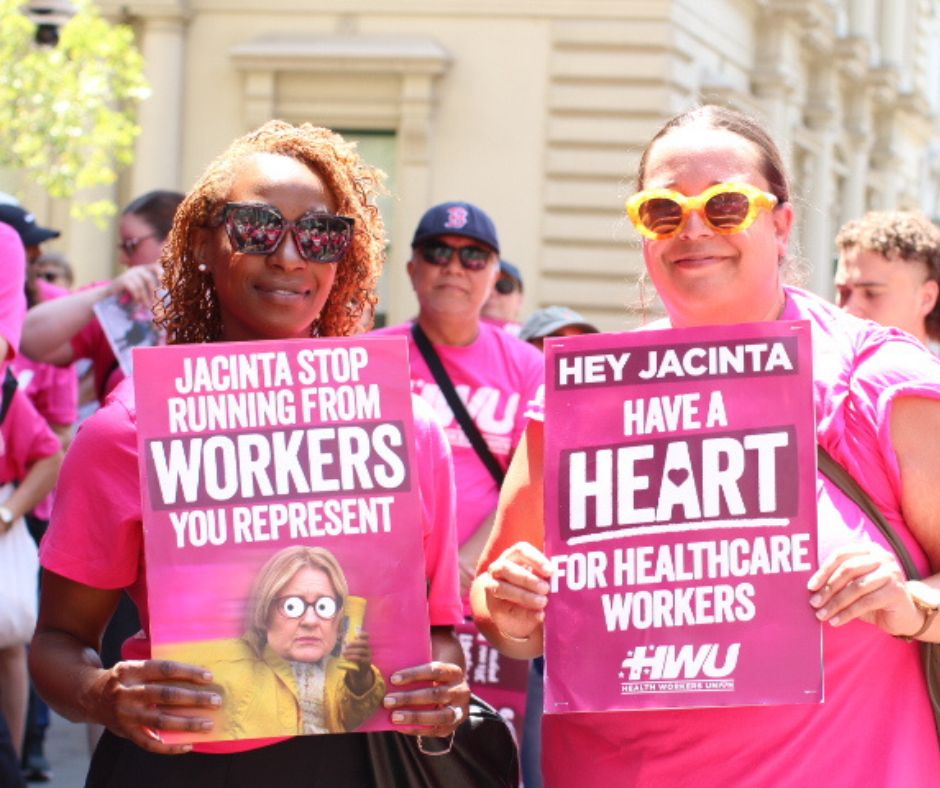
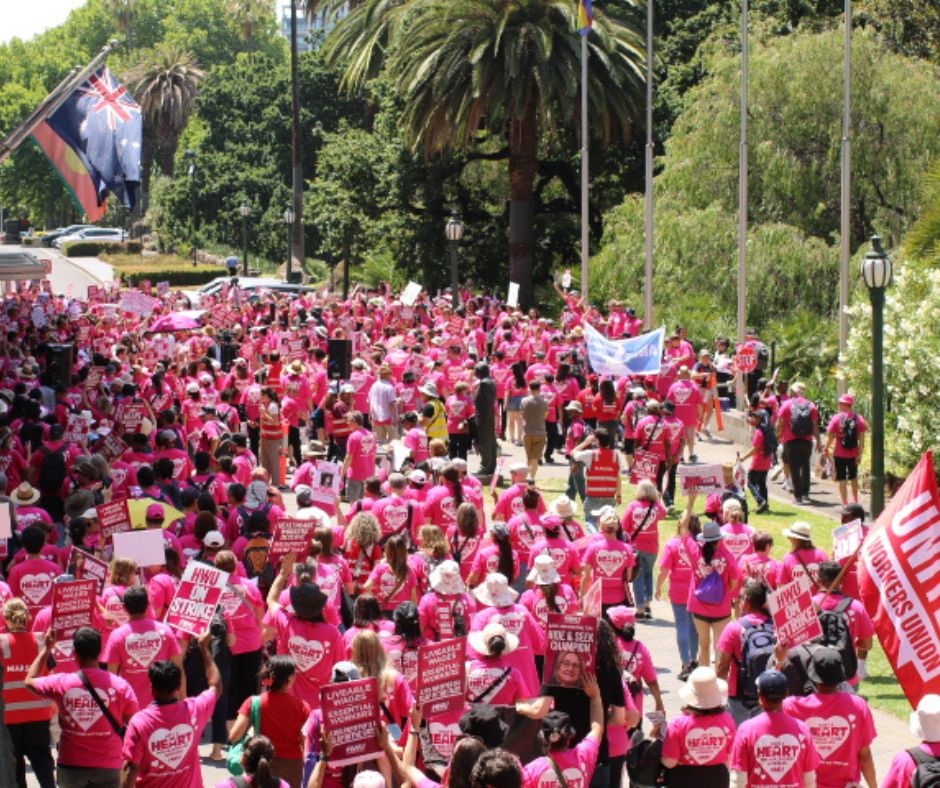
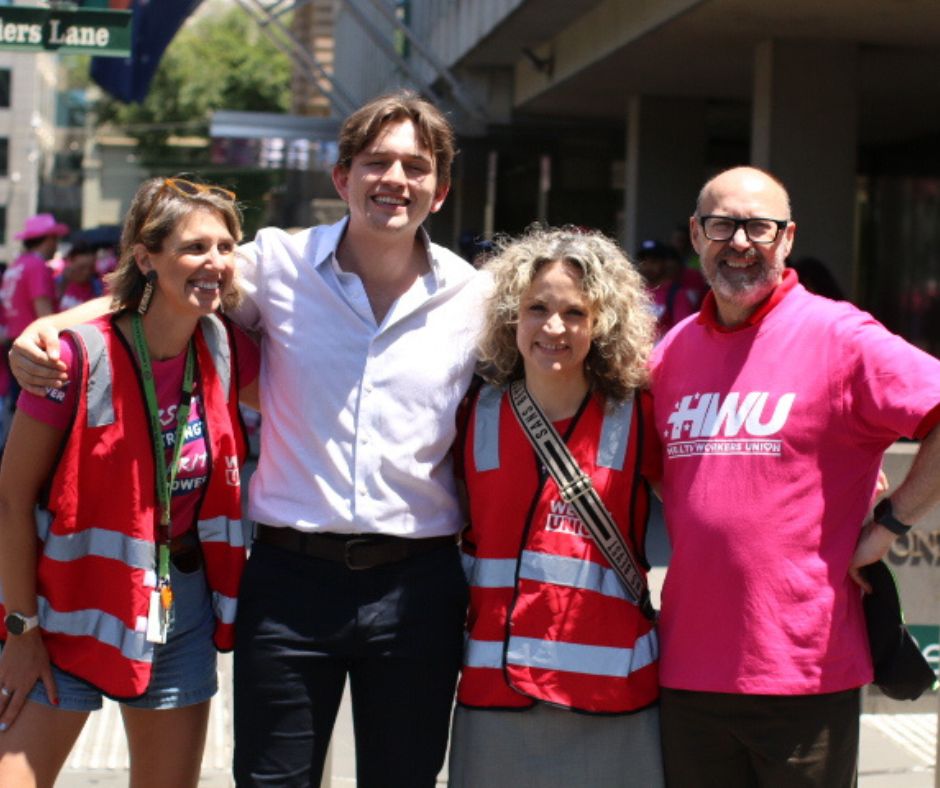
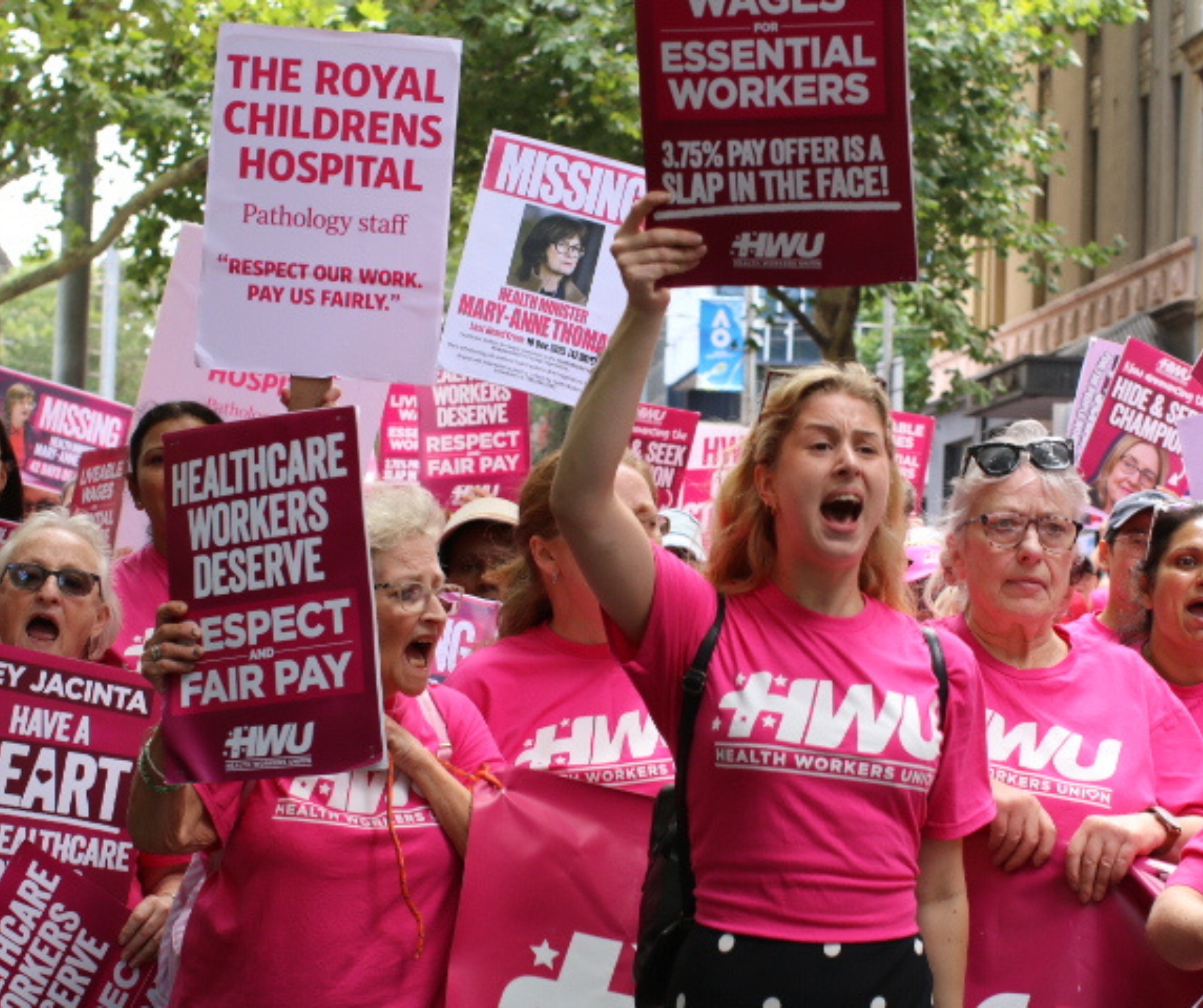
Supported by the Health Workers Union, on 20 January hundreds of workers gathered for a snap action outside the offices of Premier Jacinta Allan and Health Minister Mary-Anne Thomas over the Victorian Government’s failure to offer healthcare workers a fair, liveable wage.
Further actions were held across the state, with many travelling in from regional areas to make their voices heard and represent co-workers unable to attend.
Solidarity with the more than 10, 000 workers from over 80 health care services, including all of Melbourne’s major public hospitals, that are taking part in the ongoing industrial action which began on 14 January.
Workers want more direct engagement with the Minister so that further industrial action — and further patient inconvenience — can be avoided.
Unsustainable workloads and chronic staff shortages
Workers are reporting unprecedented burn out across Victoria, and increased workloads and staff shortages across the sector.
Burn out is at its worst regionally; in Albury Wodonga (47% of all public healthcare workers), West Gippsland (40%), Bendigo (36%), Colac (36%) and in the Grampians region (36%) are struggling with overwork and poor pay.
Burnout has been defined as “bone-deep exhaustion where you’re emotionally drained, mentally overloaded, and unable to muster the enthusiasm to keep going”.
On 4 December 2025, workers took protected industrial action for the first time in 25 years, refusing to do administrative tasks that generate revenue for health services, like processing private health insurance claims and submitting Medicare reimbursements for hospitals.
According to the union these bans are targeted and carefully designed to protect emergency and critical services, but they will cause widespread disruption. The walkout likely forced the cancellation of about 1,000 non-critical elective surgery procedures.
The worst pay offer in the public sector
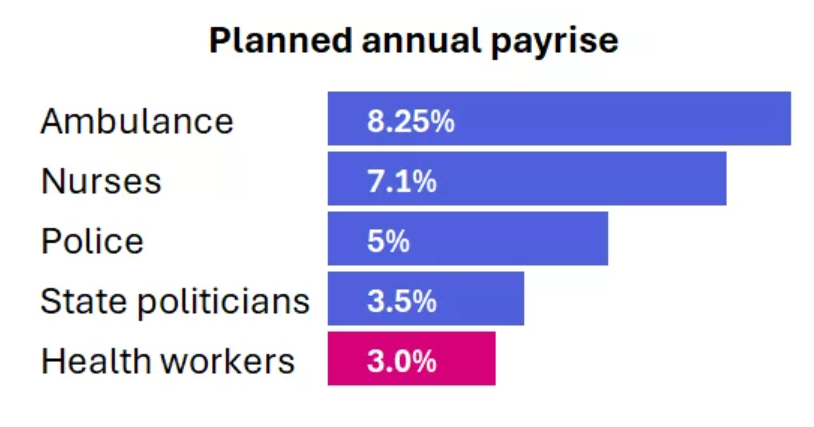
The Victorian Government’s pay offer is the worst to any public sector workforce. In 2025 other essential services secured much needed pay increases — police (5%), nurses (7.1%), and paramedics (8.25%). According to the union, health workers are asking for 6%.
Workers introduce new targeted bans
On 14 January 2026, healthcare workers implemented bans on supporting elective surgery procedures, in the latest escalation of the long-running dispute.
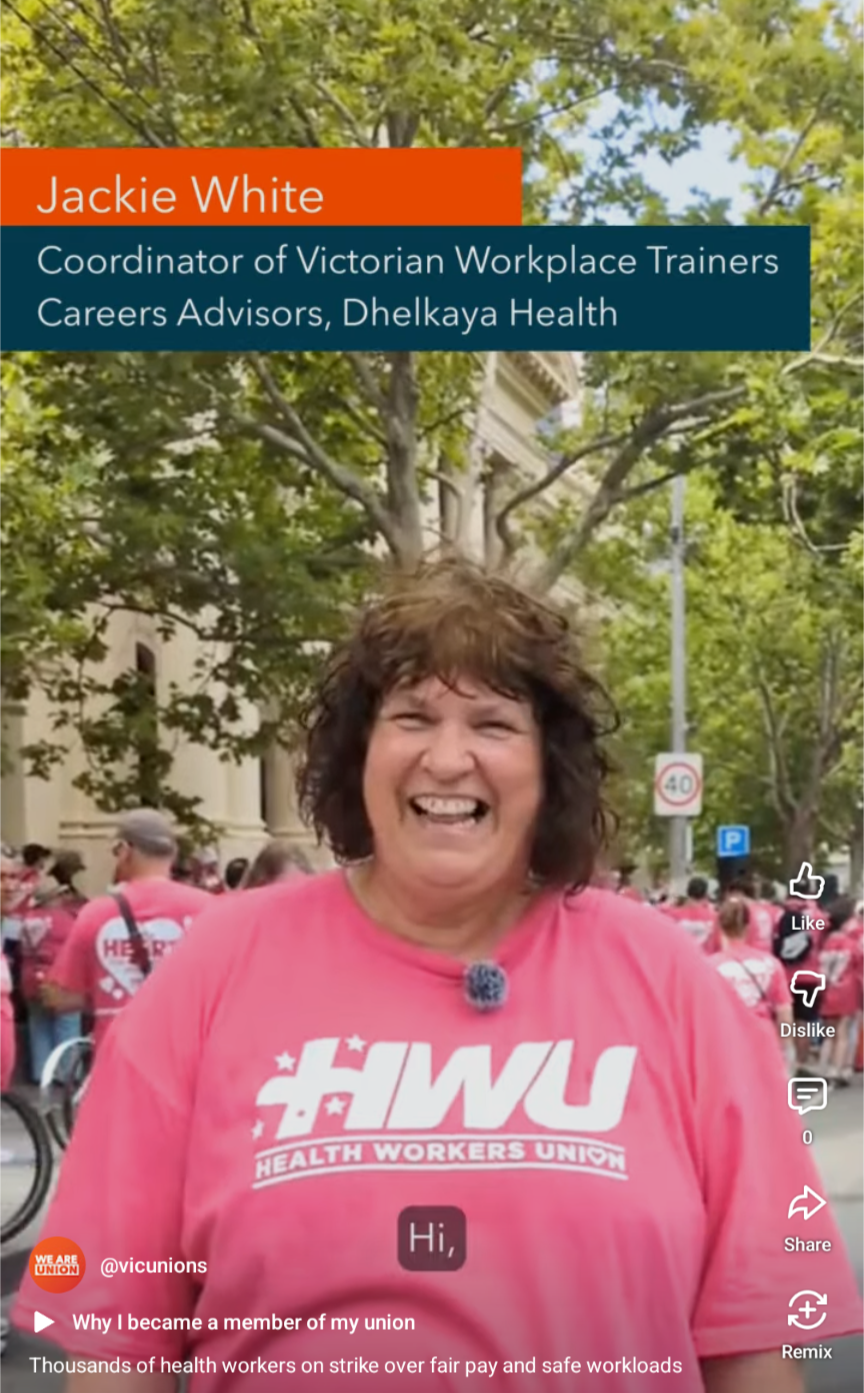
Jackie came in on 20 January from Castlemaine to Trades Hall to support workers.
The new bans saw one in every four hospital beds closed, cleaning of non-clinical areas including offices, staff rooms and cafeterias stopped, and suspension of the training and onboarding of new staff.
As the Health Workers Union said,
“Industrial action is an unfortunate necessity because of the Victorian Government’s consistent and callous disregard for essential workers’ needs.”
Health workers are some of the lowest paid in the public healthcare system and are calling for the Victorian Government to address workplace stress, overwork and chronic staff shortages. Workers will not accept the current pay offer under inflation at 3.75%.
Health workers are calling on the Premier and the Minister for Health to meet with representatives. The HWU rejected a below-inflation pay offer in December and has repeatedly sought to meet with the Government to avoid escalation — but has received no acknowledgement or engagement from the Minister’s office.
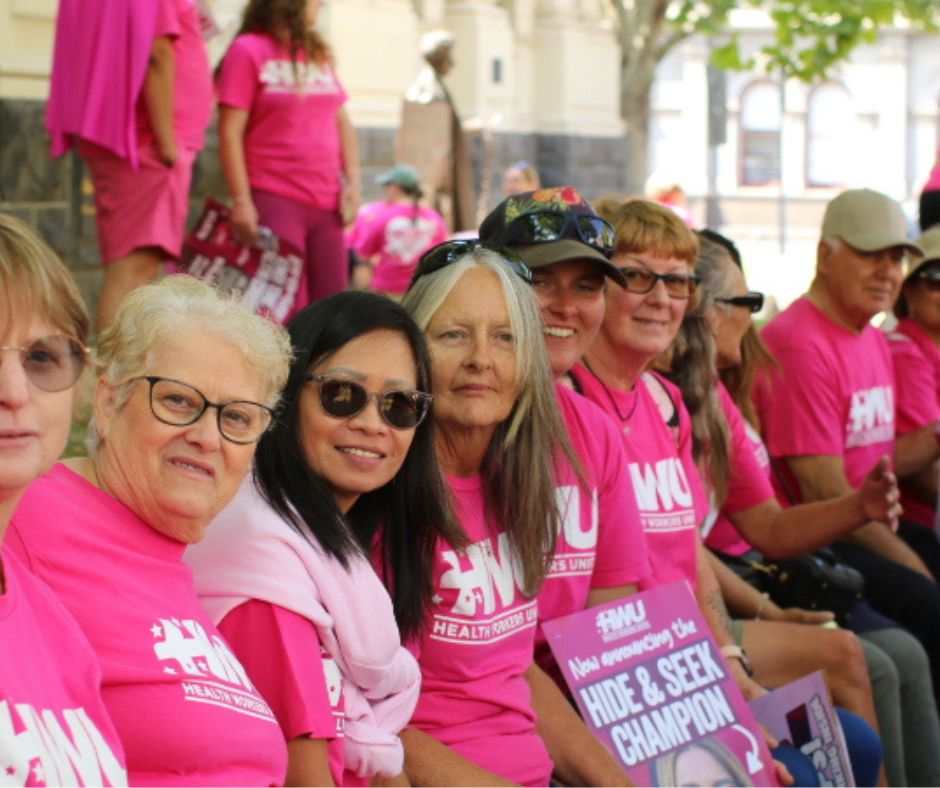
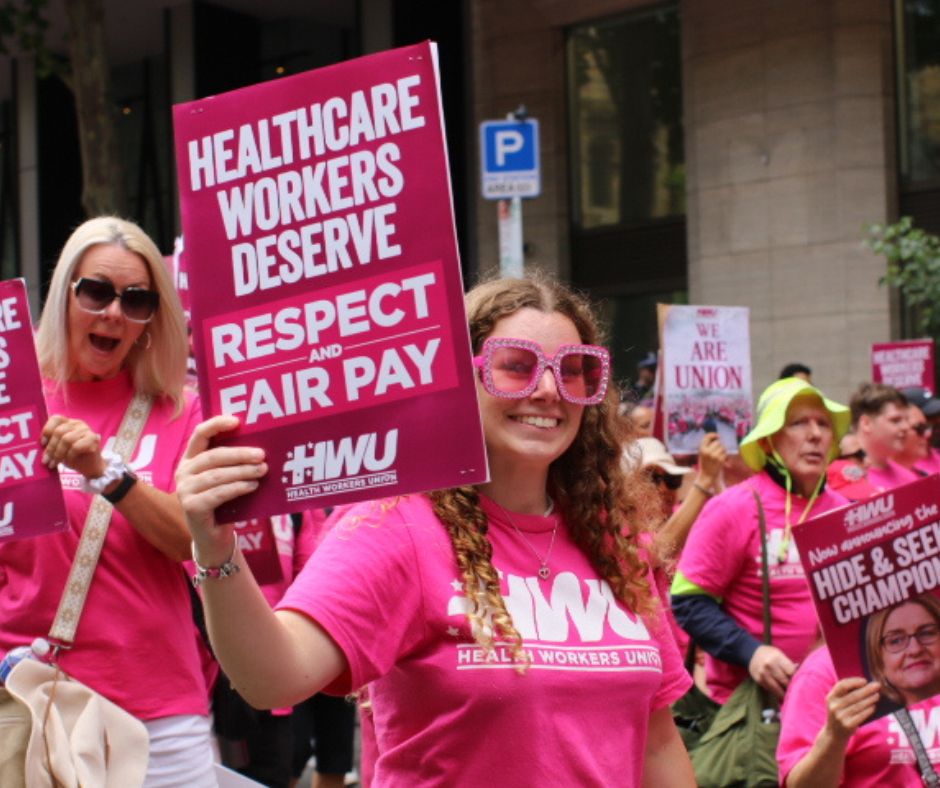
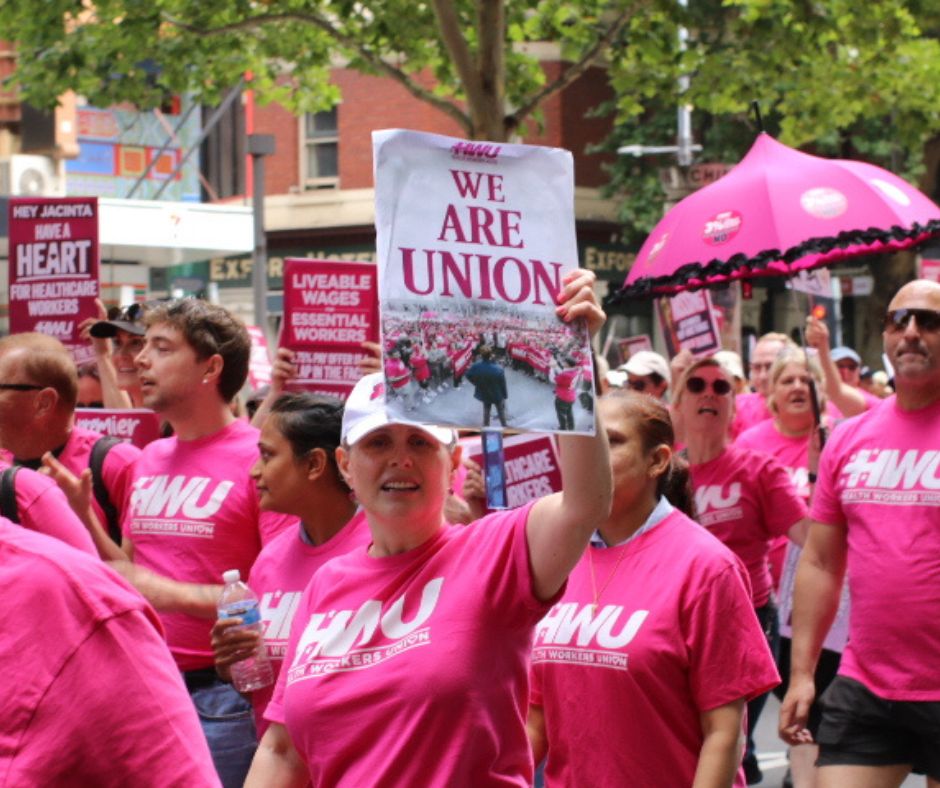
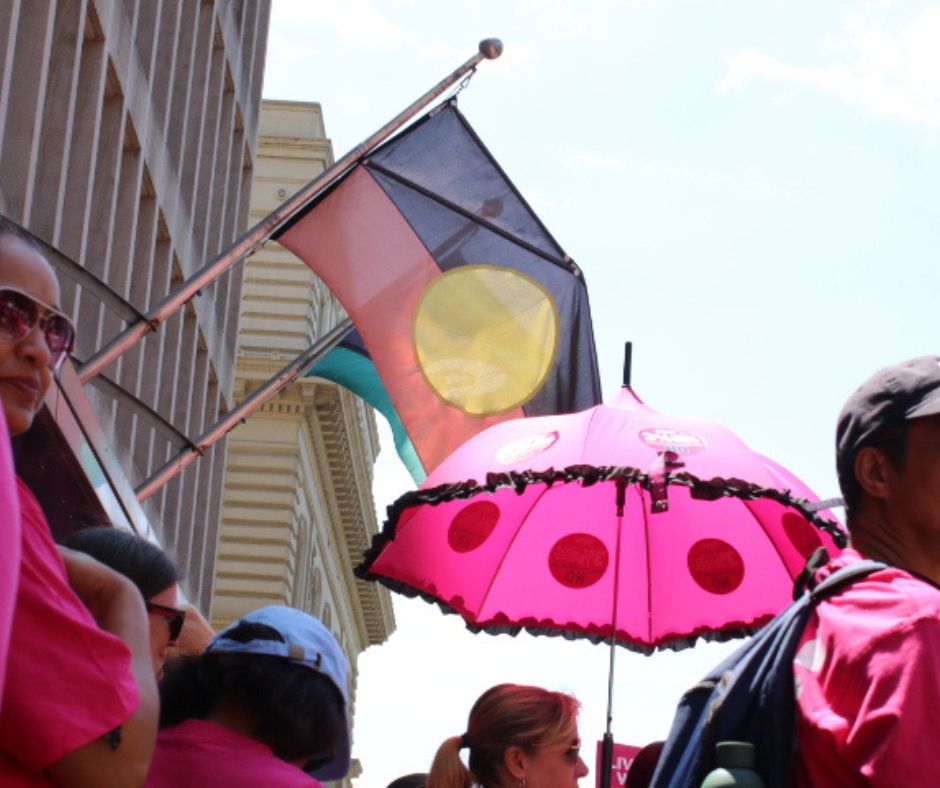
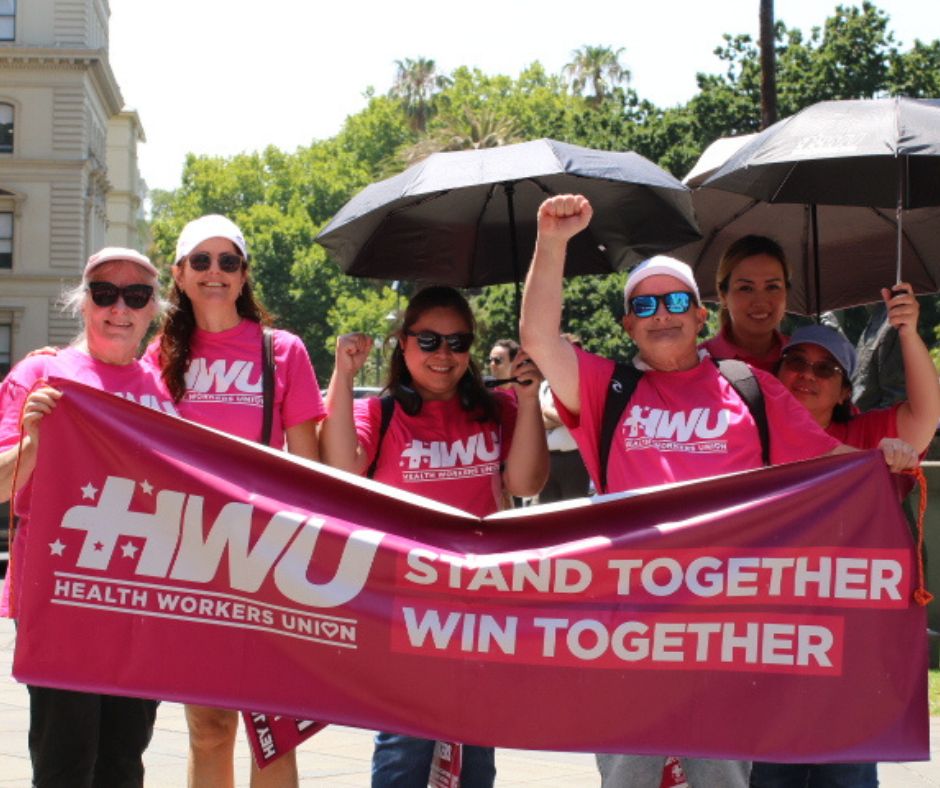
Some of our favourite ‘snaps’ of HWU’s snap action
20 Januarry 2026