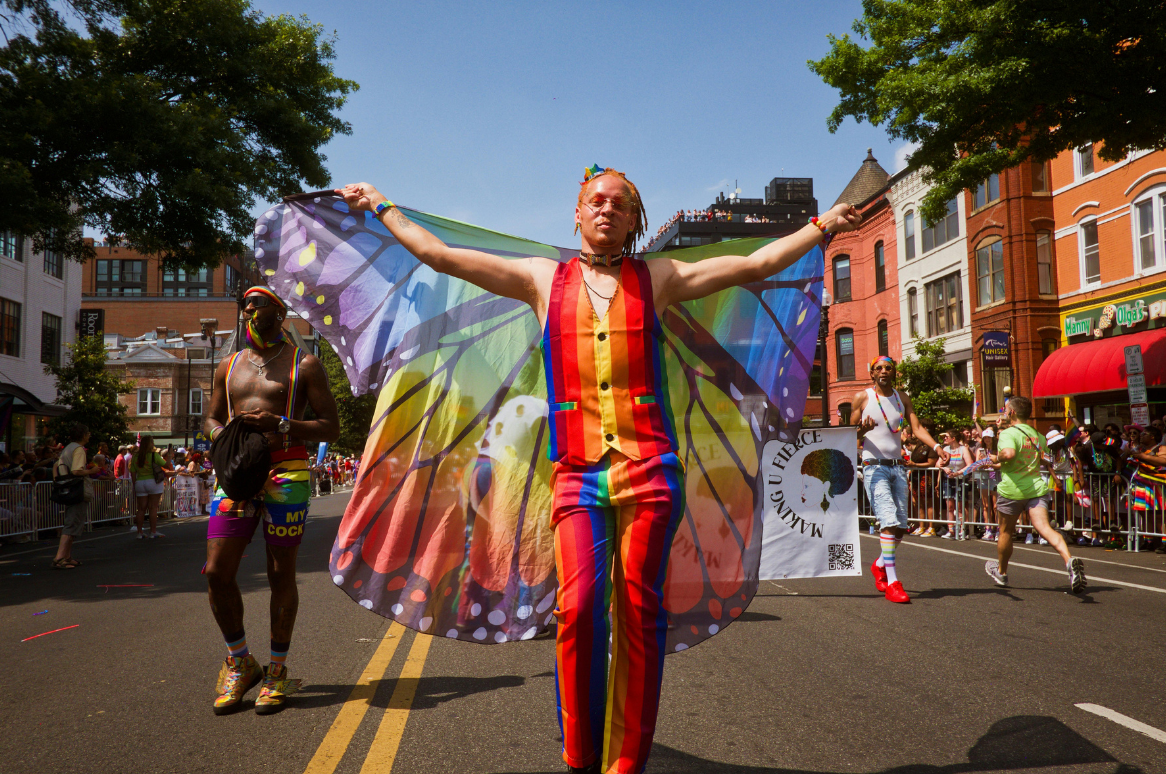
Since the first Prides, unions have stood alongside LGBTIQA+ communities to defend our rights at work and beyond. What does that support look like in practice, and how is the union movement still fighting today?
Pride is not just a celebration but an act of resistance. It reminds us that rights are never handed over, they’re won through collective action.
In Australia, that story begins in 1978 with the first Sydney Gay and Lesbian Mardi Gras rally, where many unionists were already marching and organising. That same year, the Gay Trade Unionist Group was formed, helping union members fight for LGBTIQA+ rights inside unions and across workplaces.
Pride began as resistance, and that legacy still resonates today.
|
Stonewall: the uprising that sparked Pride worldwideJune 1969. Police raid the Stonewall Inn in New York. One more act of violence against LGBTIQA+ communities. But that night, people refuse to stay silent. The community fights back. And this resistance, led by trans women of colour, grows into several days of uprising. One year later, in June 1970, the very first Pride march takes place to mark the anniversary of Stonewall. Pride movements then spread across the world and would arrive eight years later in Australia.
|
Together, we’ve won important wins
The union movement has always campaigned alongside LGBTIQA+ people to ensure their rights are respected, because equality is union business.
Here are a few examples of wins achieved together over the past 15 years.
Parental leave for rainbow families
Since 2010, same-sex parents and families using surrogacy have had the same parental leave rights as other families in Australia. This leave is now gender-neutral and is being expanded to 26 weeks in 2026.
Unions have supported this fight by pushing for inclusive clauses and equal entitlements in workplace agreements, so that every parent can take their place without barriers or inequality.
Federal anti-discrimination protections
In 2013, federal protections were strengthened to explicitly prohibit discrimination based on sexual orientation, gender identity and intersex status.*
This marked a major step forward for LGBTIQA+ workers, strengthening protections at work from hiring to dismissal. Unions continue to play a key role in making these rights real: supporting workers to speak up, challenging unfair treatment, and building workplaces where discrimination has no place.
*Sex Discrimination Amendment (Sexual Orientation, Gender Identity and Intersex Status) Act 2013
Marriage equality
In 2017, after years of mobilisation led by LGBTIQA+ communities, marriage equality was finally won. Unions played an important role by opening their offices and networks to support the “Yes” campaign.
Gender affirmation leave
Since 2018, gender affirmation leave has been achieved in many workplaces across a range of industries.
This progress is the result of long-term work. It has been won through on-the-ground organising, negotiations, and concrete union support.
Gender-based violence is a workplace Health and Safety issue
Unions have been clear for a long time: hazards at work are not only physical. Harassment, intimidation and abuse are also health and safety issues, because they directly affect workers’ health, safety and wellbeing.
That is why, since 2022*, employers have been required to proactively prevent sexual harassment and gender-based violence at work. This includes homophobic and transphobic behaviours that put LGBTIQA+ workers at risk.
*Australia’s workplace health and safety laws (psychosocial hazards framework)
Today, we are still fighting to strengthen our rights
• Expanding gender affirmation leave
After early wins in the public sector, unions are now fighting to make it a standard clause across private-sector enterprise agreements.
The goal is simple: for every trans or gender-diverse person to be supported with dignity and equally, no matter their sector or employer.
Take action: Sign the petition to support workers at Padre Roastery
• 10 days of paid reproductive health leave per year
Today, reproductive health is still treated like a private issue that has no place at work.
People often go through pain, exhaustion and stress in silence, worried about stigma, judgment or discrimination.
That silence has real consequences: delayed care, burnout, and missed work opportunities. That’s why we’re calling for 10 days of paid reproductive health leave per year for every worker, including abortion care, hormone treatments, pregnancy-related illness, fertility journeys, and more. So no one has to choose between their health and their job.
Read more: Our campaign “It’s for Every Body”
Minds are changing. Laws can change too.
But nothing is won without solidarity and collective struggle.
That’s what being union is all about. And to keep growing these rights, and to guarantee respect for everyone, we need you!
JOIN US.
Become an activist
Join your union