
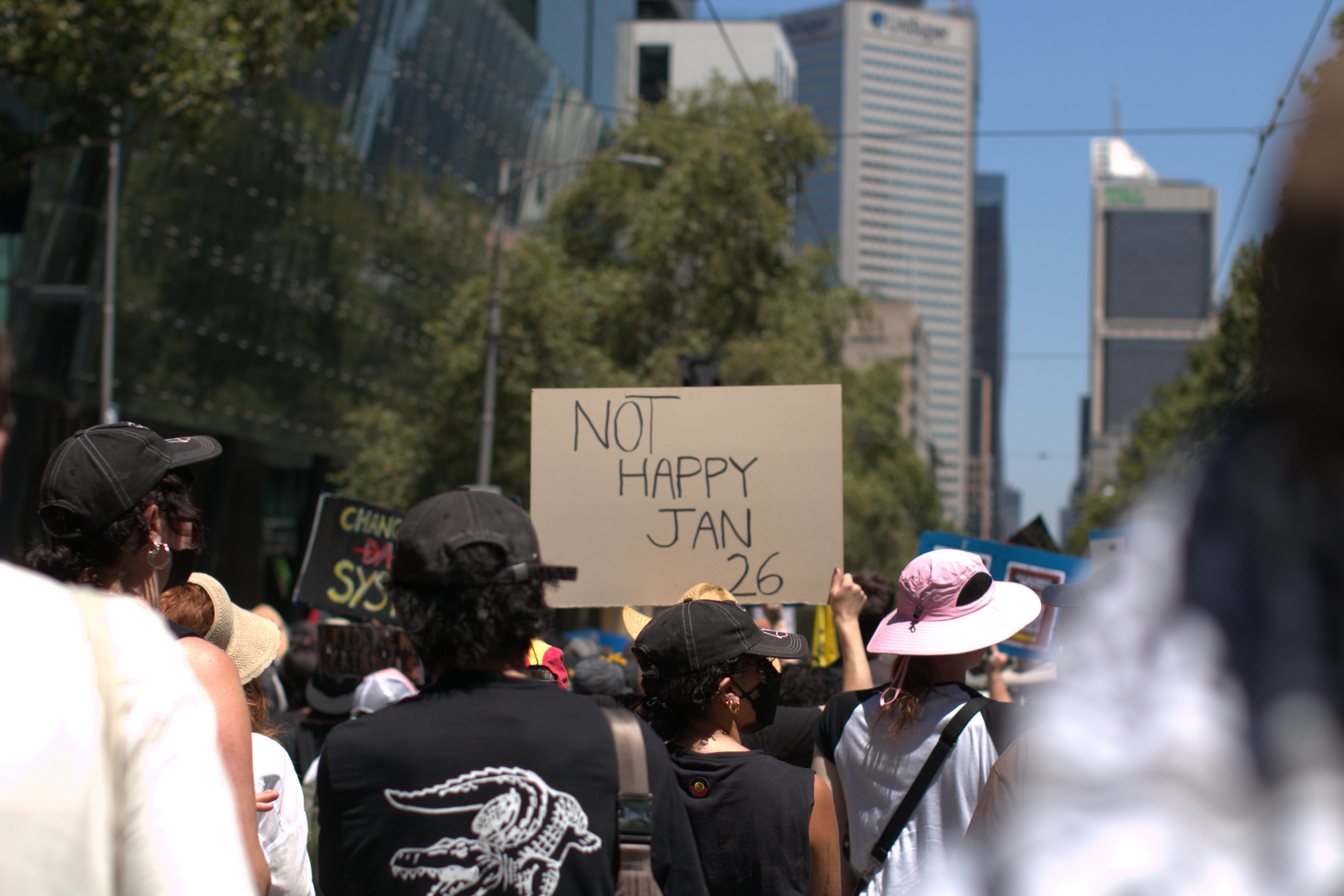
Invasion Day Rally on 26 January 2026, in front of the Victorian Parliament. © Lara Levy
26 January is presented as Australia’s national day. Where does this date come from and why can’t it be considered a national celebration by many First Nations peoples and their allies? Here is an explanation.
26 January is a highly significant date, one that forces us to confront history.
Understanding what it represents for Aboriginal and Torres Strait Islander peoples is essential to any conversation about justice and respect today, including in Victoria where the Treaty process is ongoing.
Read more: Treaty for Victoria: an historic step towards truth and justice
Where does this date come from?
26 January refers to the beginning of British colonisation in 1788, when the First Fleet and Governor Arthur Phillip established the colony at Sydney Cove. In official narratives, this moment is often framed as a “foundation”. But for First Nations peoples, it is an open wound: a symbol of the shift towards dispossession, colonial violence, and the denial of their sovereignty.
This day marks the beginning of when their lands were taken, their rights were denied, and their communities were subjected to violence from the earliest years of colonisation.
“Australia remains the only country that marks its national day on the anniversary of invasion. January 26 is a day of pain, not pride.”
– Travis Lovett, Kerrupmara Gunditjmara, Boandik
It is in this context that 26 January is referred to as Invasion Day. And it is also to acknowledge the ongoing struggle, resilience, and continued presence of First Nations peoples, despite everything, that it is also known as Survival Day.
The debate around this day also relates to the history of terra nullius, the colonial fiction of an “empty land”, used to justify stealing land.
For many, celebrating 26 January therefore amounts to celebrating colonisation.
26 January only became a national public holiday in 1994Australia has not always had one single national date. Over time, different states (and sometimes the nation) observed “Australia Day” or similar public holidays celebrating Australian identity on a range of dates. • 30 July 1915 (national): the first official day actually called “Australia Day” was held as a World War I fundraising day. • 28 July 1916 (national): “Australia Day” was held again in July, and continued during the war years (including 1917 and 1918). • 28 December (SA, regional): “Proclamation Day” marked the establishment of South Australia as a British province. • 1 June / first Monday in June (WA, regional): “Foundation Day” (now known as “WA Day”) commemorated the founding of the Swan River Colony. • 1 December (TAS, regional): “Hobart Regatta Day” became Tasmania’s long-running public holiday and was once a key date of local identity. But 26 January only became a national public holiday across all states and territories in 1994. Long before 26 January was ever recognised as a national day, it was commemorated as a Day of Mourning, to draw attention to the shameful treatment of First Nations people and discrimination entrenched not just in our communities but in our laws. In 1938, a Day of Mourning was organised by the Aborigines Progressive Association with support from William Cooper and the Australian Aborigines' League In Victoria. It began with a march through Sydney and ended with a congress which passed the following resolution: |
A day of mobilisation against racism and the legacy of colonisation
Over the years, Invasion Day has also become a national day of mobilisation. Across the country, rallies led by First Nations peoples and supported by many allies denounce the continued celebration of this date as a national day. But these marches are not limited to a symbolic protest. They highlight the ongoing impacts of colonisation and the contemporary forms of racism that persist today.
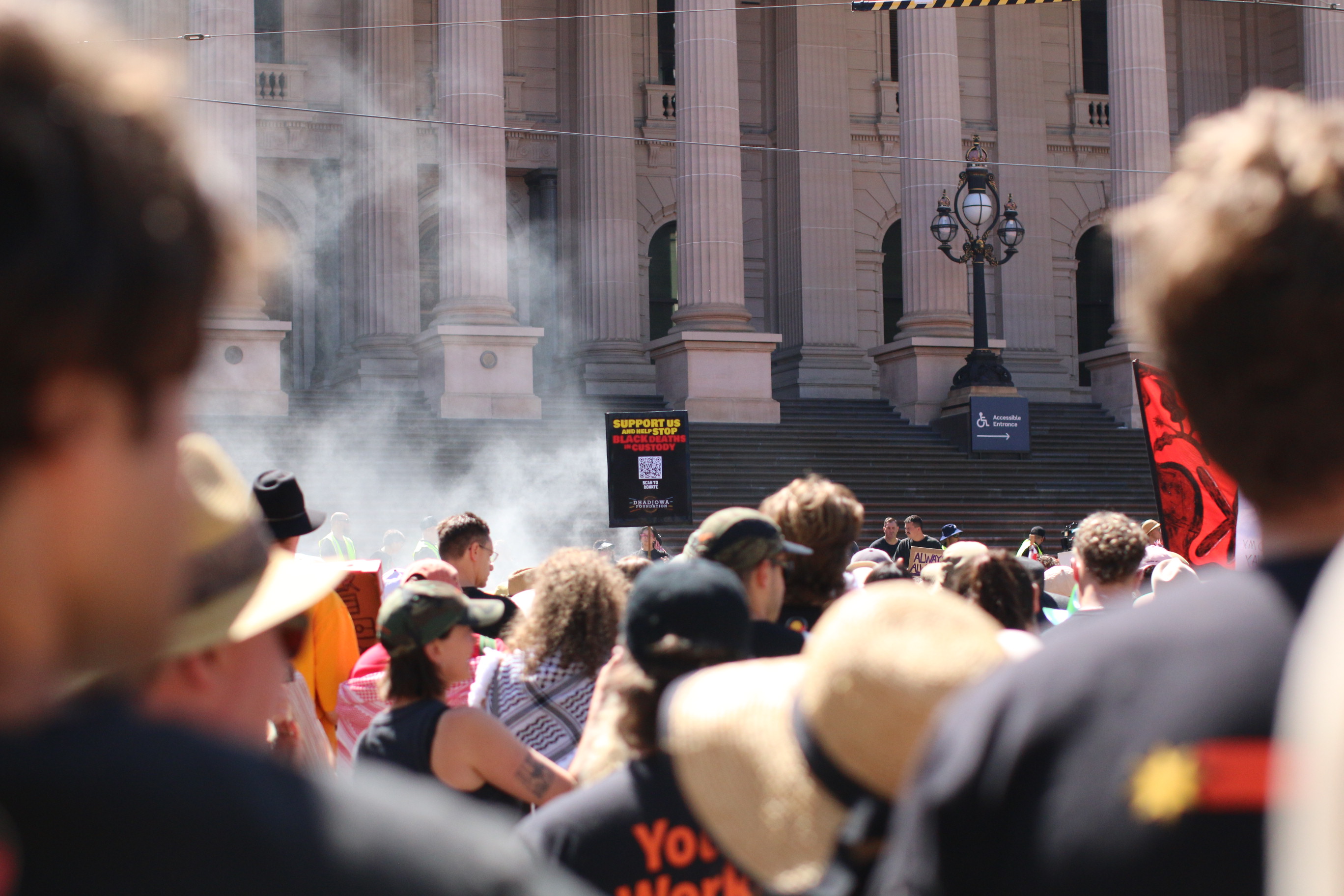
Invasion Day Rally on 26 January 2026, in front of the Victorian Parliament. © Lara Levy
Chants and speeches often point to the dramatic over-representation of First Nations peoples in the criminal legal system, as well as the institutional and police violence that still affects entire communities. The issue is concrete and urgent, particularly in the face of the criminalisation of Aboriginal and Torres Strait Islander children and young people. According to the Indigenous Health Performance Framework (AIHW) in 2021–2022, First Nations young people (aged 10–17) were 24 times more likely to be in detention than non-Indigenous young people.
In this context, 26 January becomes a turning point: either Australia chooses to continue celebrating a date experienced as a wound, or it moves towards real change and an honest reckoning with our brutal history.
Educate yourself and support First Nations people
Supporting First Nations peoples does not start by speaking for them, but by listening, learning, and sharing reliable sources.
Organisations such as First Peoples' Assembly of Victoria and platforms like Common Ground offer accessible content on colonial history, current issues, and the reasons why 26 January is contested.
The podcast Always Was (ABC) is a useful entry point for understanding these debates and their historical roots, without oversimplifying.
ANTaR’s website provides a clear overview of the history of 26 January, the origins of Survival Day, and why this date is experienced as a day of mourning rather than celebration.
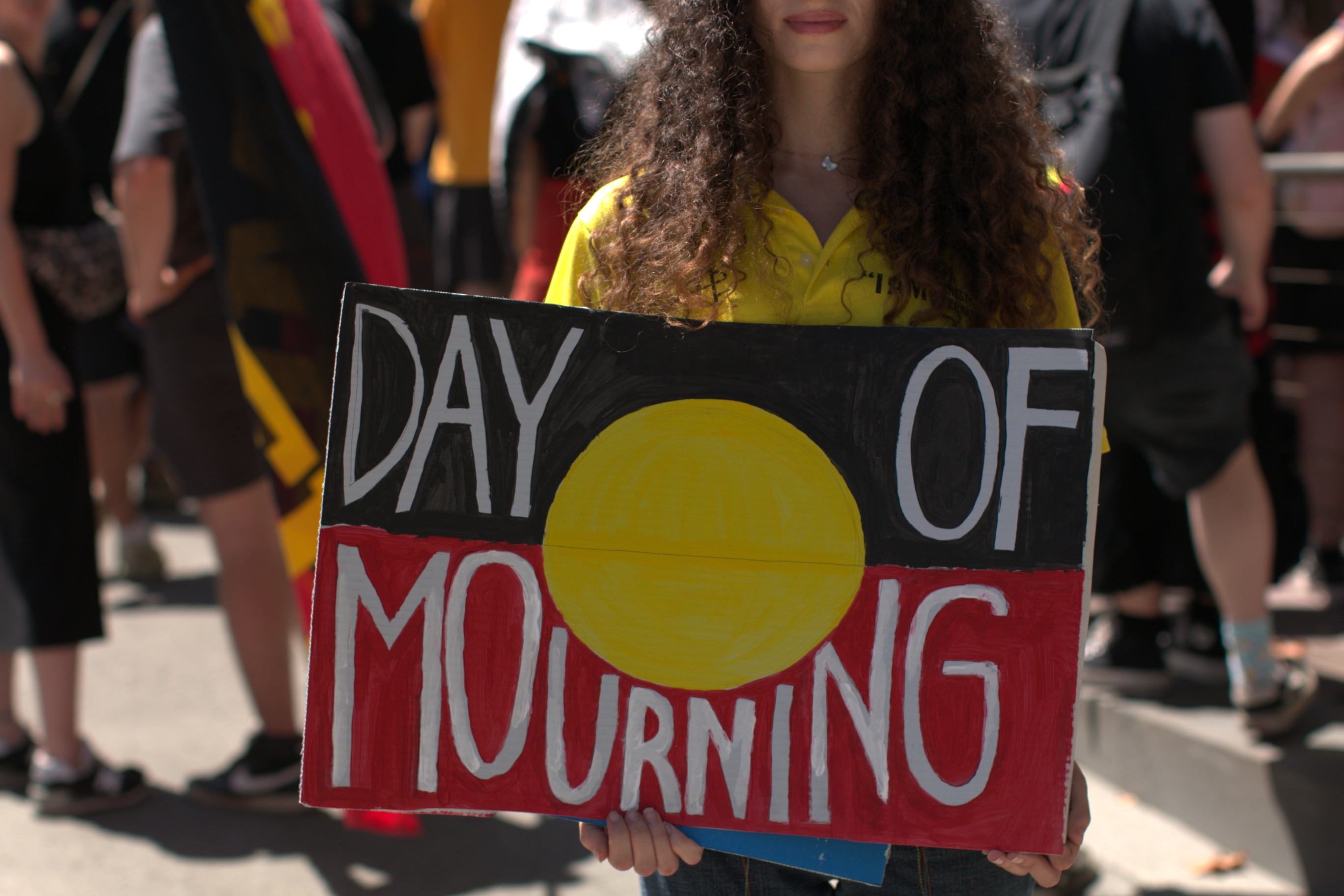
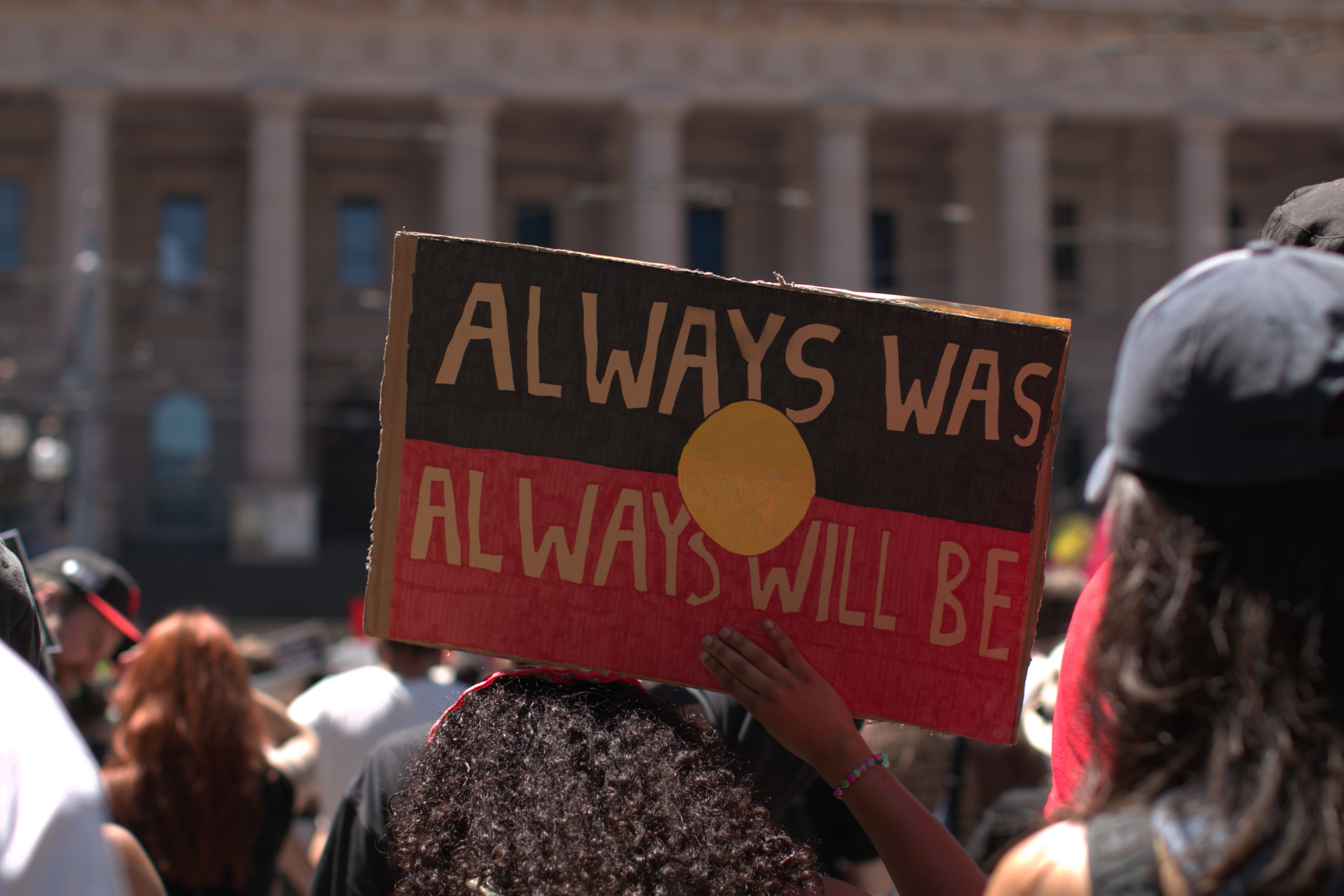
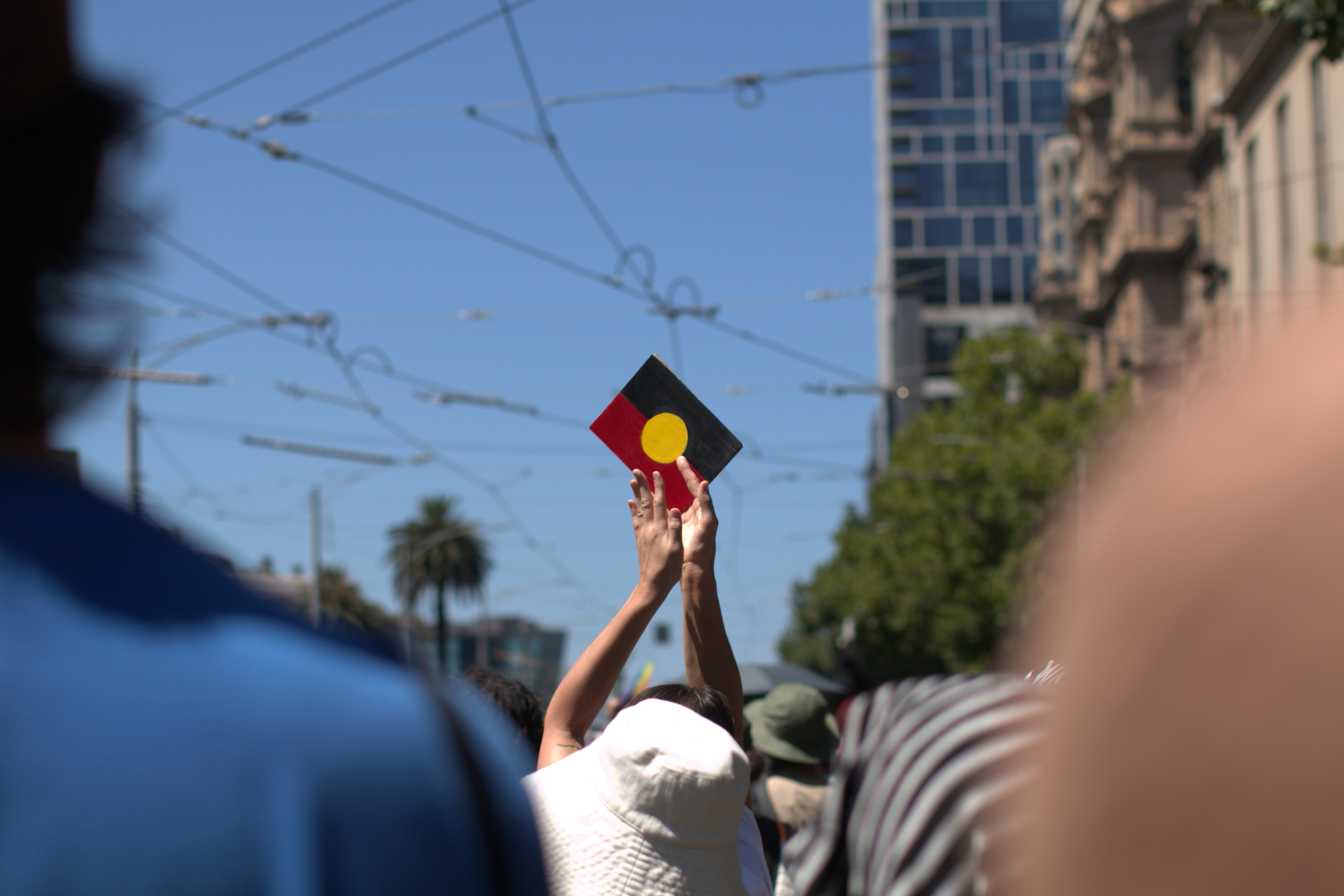
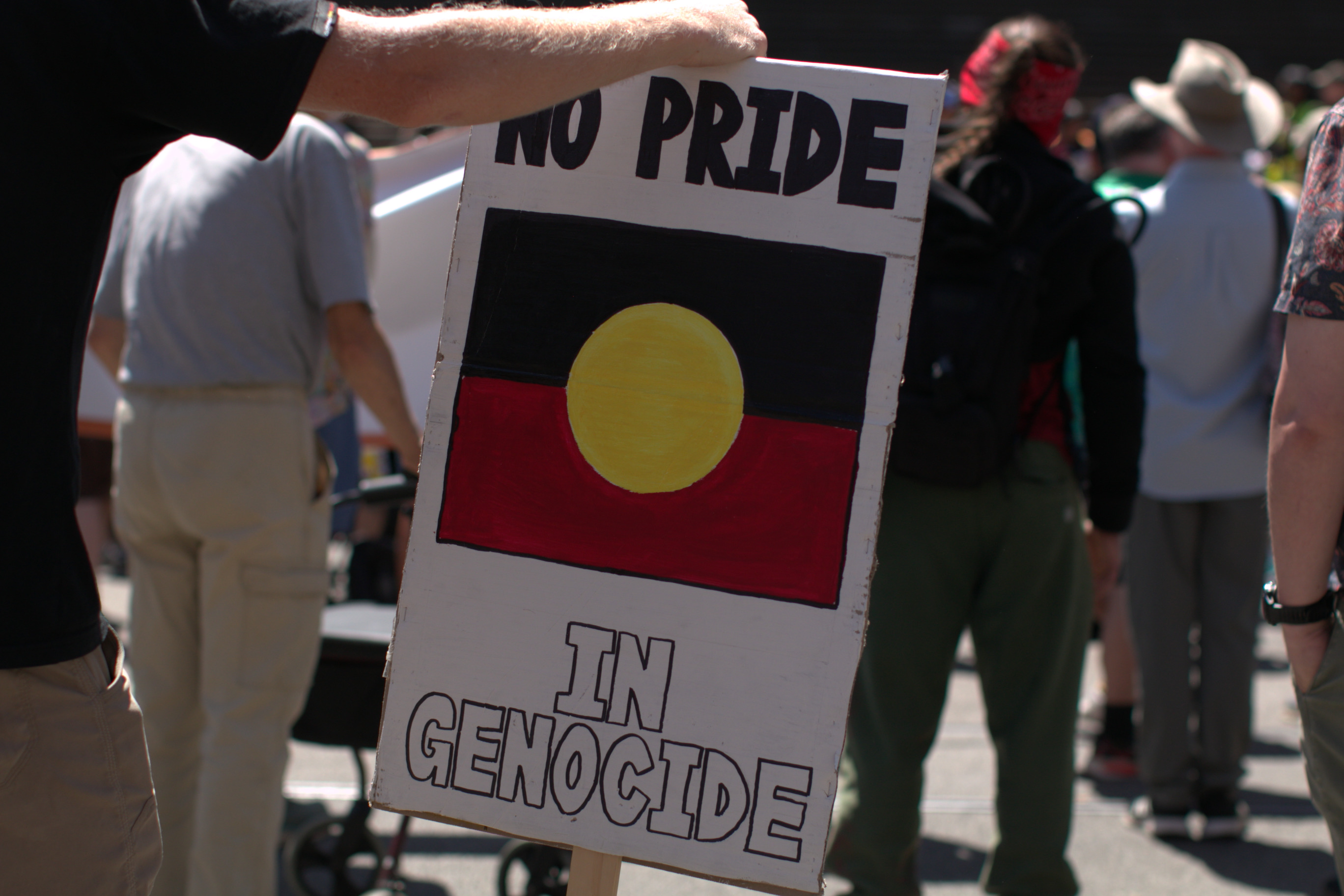
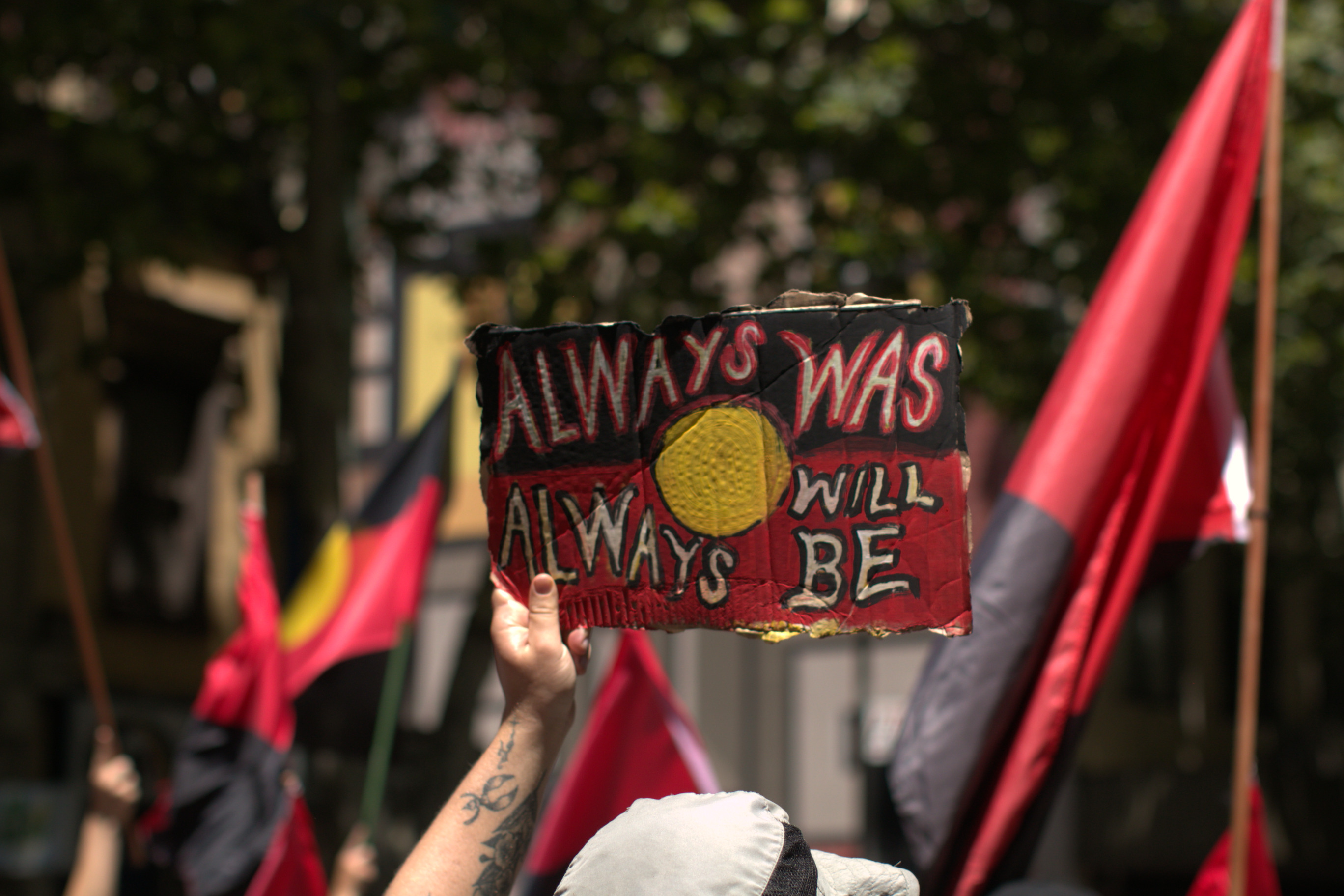
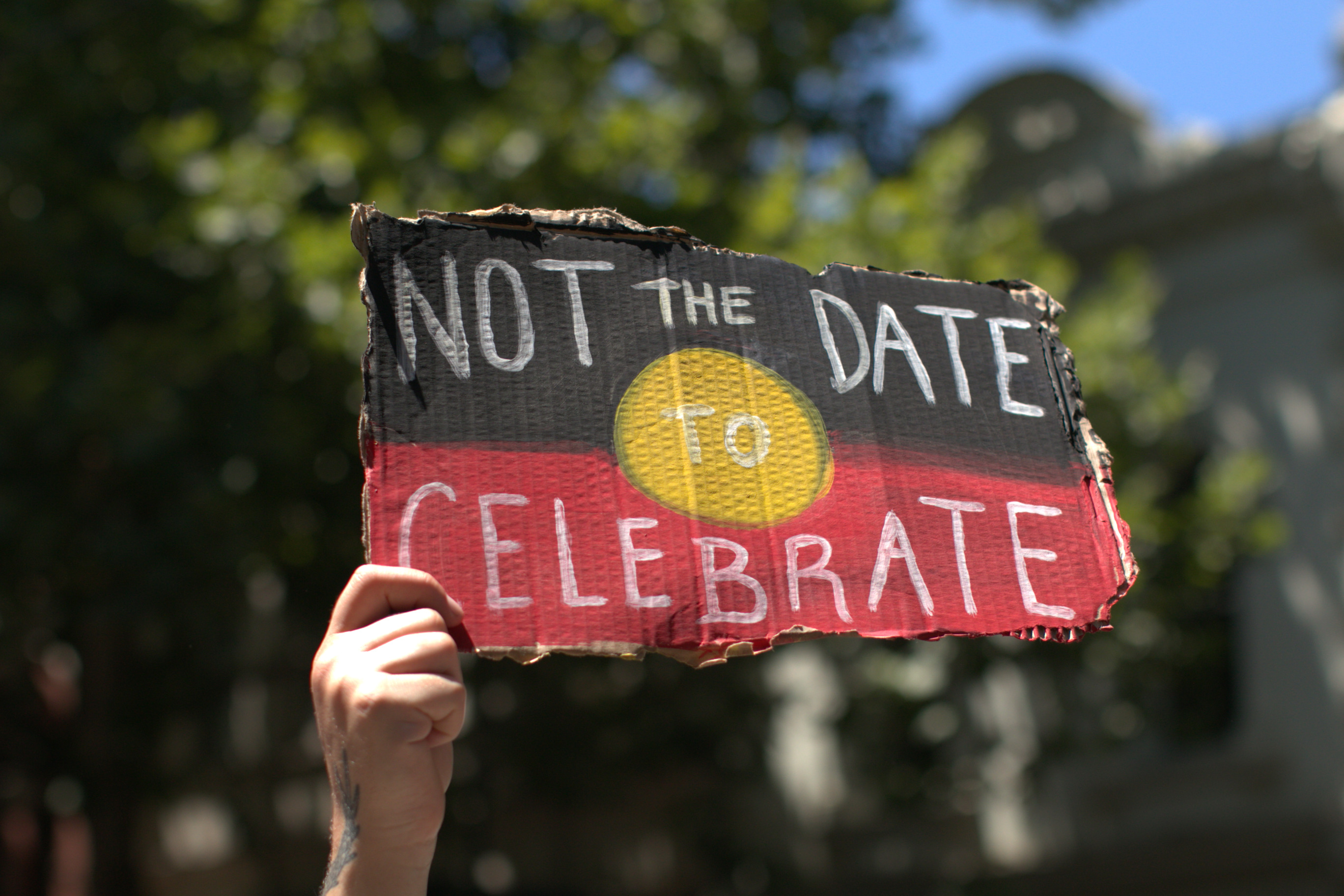
Invasion Day Rally on 26 January 2026, in front of the Victorian Parliament. © Lara Levy